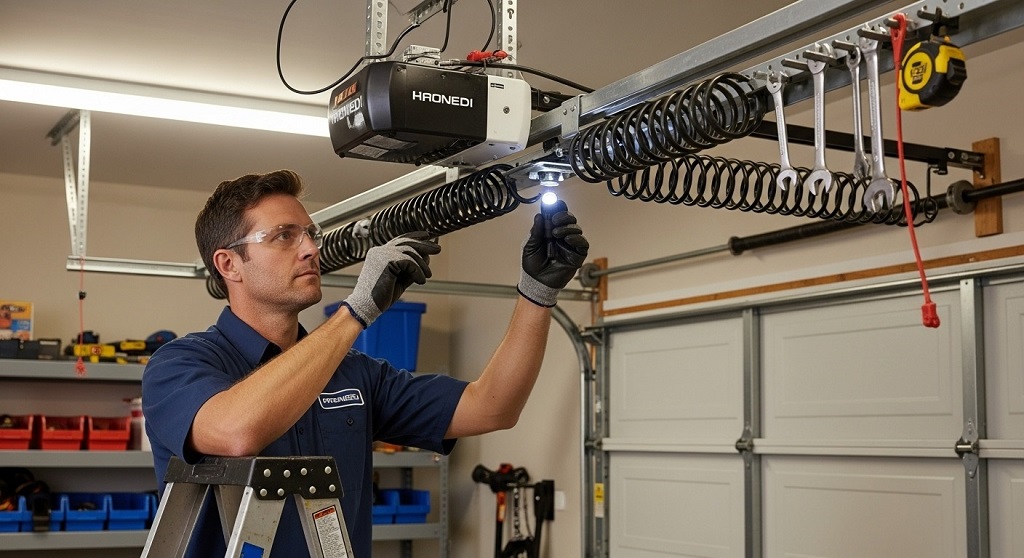
Inspecting garage door hardware means checking critical mechanical parts—especially springs, cables, rollers, tracks, and brackets—to ensure they are safe, balanced, and functioning correctly without signs of wear or failure.
Why is garage door spring inspection critical for safety?
A garage door may look simple. In reality, it is one of the heaviest moving objects in a home. Most residential garage doors weigh between 130 and 350 pounds. That weight is controlled almost entirely by the springs.
If a spring fails, the door can drop suddenly. This causes injuries, property damage, and costly repairs. According to U.S. Consumer Product Safety data, thousands of garage door–related injuries occur every year, many linked to spring or hardware failure.
This guide explains how to inspect garage door hardware with a strong focus on how to inspect garage door springs safely. You will learn what to check, what warning signs matter, and what you should never touch. This article follows a safety-first approach. No risky shortcuts.
If you own a home, rent a property, or manage buildings, understanding basic inspection steps can help prevent accidents and extend the life of your garage door system.
What problem do damaged garage door springs create?
Short answer: Damaged springs make the door unsafe, unbalanced, and unpredictable.
Garage door springs counterbalance the door’s weight. When springs weaken or crack, the opener works harder. Over time, this leads to:
- Sudden door drops
- Stripped opener gears
- Cable snapping
- Increased injury risk
Case study data from garage service companies shows that over 60% of emergency garage door repairs are caused by ignored spring wear.
Why do homeowners miss early spring damage signs?
Short answer: Most spring damage develops slowly and silently.
Springs do not fail overnight. They lose tension over time. A standard torsion spring is rated for 10,000 cycles. That equals about 7–10 years for an average household.
Because doors still open during early wear, homeowners assume everything is fine. By the time the spring breaks, failure is sudden and loud.
What types of garage door springs exist?
Short answer: There are two main types: torsion springs and extension springs.
Torsion springs
Mounted above the door on a metal shaft. These are common in modern doors and safer when installed correctly.
Extension springs
Located on both sides of the door. These stretch when the door closes. Older systems often use them.
| Spring Type | Location | Risk Level |
|---|---|---|
| Torsion | Above door | High if adjusted incorrectly |
| Extension | Sides of door | High if safety cables missing |
How to inspect garage door hardware safely before touching springs?
Short answer: Secure the door, disconnect power, and use visual inspection only.
Before inspecting any garage door hardware:
- Close the garage door fully
- Unplug the automatic opener
- Engage manual lock if available
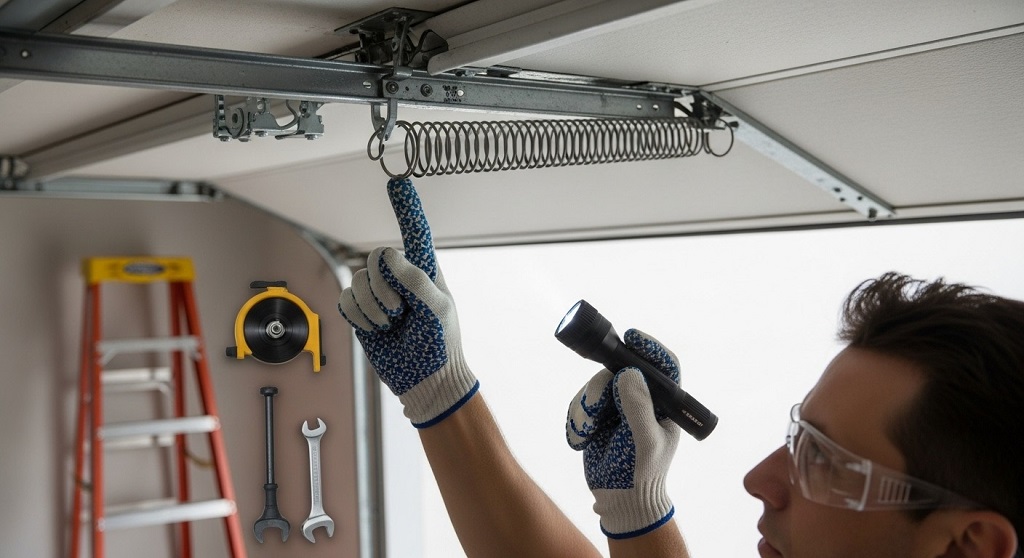
- Wear safety glasses and gloves
Never inspect springs while the door is open or moving.
How to inspect garage door springs without touching them?
Short answer: Look for visual damage, spacing changes, and imbalance symptoms.
Check for visible gaps or breaks
A healthy torsion spring is tightly wound. If you see a gap of 1–2 inches, the spring is broken.
Look for rust and corrosion
Surface rust increases friction and shortens spring life. Rusty springs fail earlier.
Observe uneven stretching
Extension springs should stretch evenly. If one side hangs lower, tension is uneven.
How can door movement indicate spring issues?
Short answer: Uneven or jerky movement signals spring imbalance.
Lift the door manually halfway and release it carefully.
- If it drops: springs are weak
- If it rises: springs are over-tensioned
- If it tilts: one spring is failing
This test does not require touching the springs directly.
What sounds indicate failing garage door springs?
Short answer: Loud bangs, grinding, or squeaking sounds.
A broken torsion spring often makes a sharp bang similar to a firecracker. Grinding noises suggest dry or corroded springs.
How to inspect garage door hardware beyond springs?
Short answer: Springs affect all connected components.
Cables
Check for fraying or slack. A failing spring often overloads cables.
Rollers
Worn rollers increase stress on springs.
Mounting brackets
Loose brackets shift tension and increase spring failure risk.
What mistakes should never be made during spring inspection?
Short answer: Never adjust, loosen, or remove springs.
- Do not use tools on springs
- Do not lubricate broken springs
- Do not attempt DIY tension adjustment
Industry data shows spring-related injuries mostly occur during DIY adjustments.
When should a professional be called immediately?
Short answer: Any visible damage or balance failure requires expert service.
Call a technician if:
- A spring is broken
- The door feels heavier
- The opener strains or stops
How often should garage door springs be inspected?
Short answer: Visually inspect every 3–4 months.
Professional inspection is recommended once per year.
Conclusion: Why safe inspection matters more than repair
Garage door springs do one job—control weight. When they fail, the results are serious. Knowing how to inspect garage door hardware safely helps you detect early warning signs without risking injury.
You do not need tools. You do not need technical training. You only need consistency and awareness.
Call to Action: If your garage door shows any of the signs discussed above, schedule a professional inspection today. Prevention costs less than emergency repair—and far less than injury.
Frequently Asked Questions (FAQs)
How do I know if my garage door spring is about to break?
Look for rust, gaps in the coil, uneven door movement, or loud noises. These are early warning signs.
Can I touch garage door springs during inspection?
No. Visual inspection only. Touching or adjusting springs is dangerous.
How long do garage door springs usually last?
Most springs last 7–10 years or about 10,000 cycles.
Is it safe to open a garage door with a broken spring?
No. Opening the door can cause sudden drops and opener damage.
Do both springs need replacement if one fails?
Yes. Replacing both ensures balanced tension and longer lifespan.
What is the cost of ignoring spring inspection?
Ignoring inspection often leads to emergency repairs costing 2–3 times more than planned maintenance.
Can lubrication prevent spring failure?
Lubrication reduces friction but does not stop metal fatigue.
Related Topics: How to Renovate Office Space with Modern Dubai Design Trends
Related Topics: How to Plan a Villa Renovation in Dubai Without Overspending