
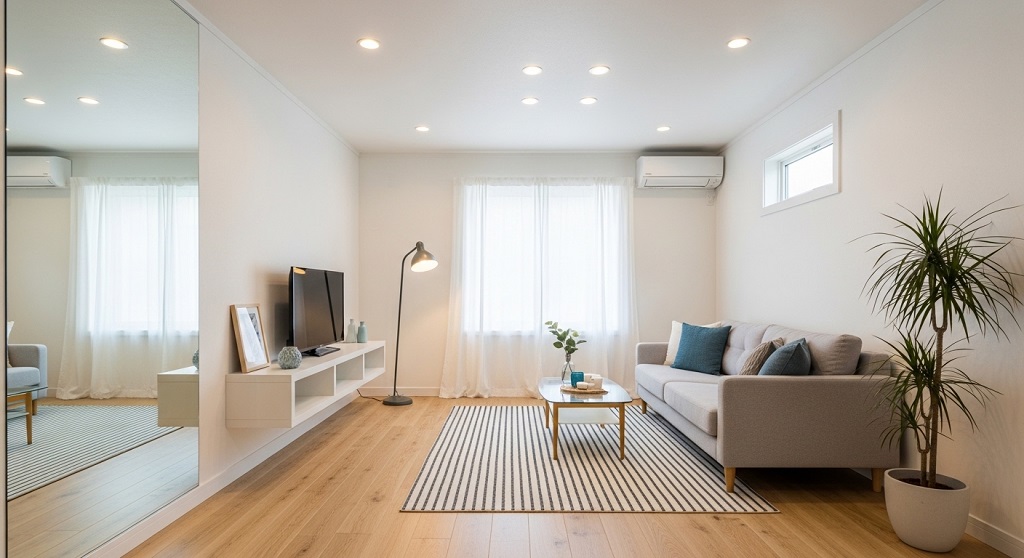
Small homes create daily friction. Rooms feel crowded. Storage disappears quickly. Furniture blocks movement. Even natural light seems limited. The result is stress and visual clutter.
The good news: you don’t need renovation or expensive remodeling to change how your home feels. Strategic layout decisions, lighting control, and visual design tricks can dramatically increase perceived space.
This guide explains practical, research-backed interior design strategies that make compact homes feel larger, brighter, and more functional immediately.
What Are the Fastest Ways to Make a Small House Look Bigger?
Snippet Answer: Use light wall colors, mirrors opposite windows, vertical storage, multi-purpose furniture, declutter surfaces, improve lighting layers, and maintain visual continuity across rooms. These changes expand perceived space by increasing brightness, reducing visual barriers, and guiding the eye smoothly through the home without structural renovation.
Most small homes feel cramped because of visual interruptions, poor lighting, and oversized furniture. Fixing these three issues creates immediate improvement.
Start with color consistency. When walls shift between dark tones and contrasting trims, the eye stops repeatedly. Continuous light tones make rooms appear connected and open.
Next, improve lighting distribution. Replace single ceiling lights with layered lighting across corners and walls.
Finally, reduce surface clutter. Even useful objects shrink perceived space when visible in groups.
- Keep furniture legs visible
- Use mirrors across light sources
- Maintain consistent flooring between rooms
- Limit wall decorations to fewer large pieces
These adjustments influence perception immediately without requiring structural change.
How Does Color Choice Affect the Size of a Small Home?
Answer Block: Light neutral wall colors reflect more light and reduce visual boundaries, making rooms appear larger. Consistent tones across walls, ceilings, and trim prevent eye interruptions and create spatial continuity, which increases perceived openness even when physical square footage remains unchanged.
Color affects spatial perception more than furniture placement in many small homes. Dark walls absorb light and visually shorten distance between surfaces.
Light colors reflect daylight deeper into the room. This creates a sense of extended depth.
Best color families include:
- Soft white
- Warm beige
- Light gray
- Pale sage green
Ceiling color also matters. A ceiling painted slightly lighter than walls appears higher.
Avoid strong contrast between trim and walls. Matching trim color to walls removes visual edges that reduce perceived size.
For extremely compact rooms, use a single palette across adjacent spaces. Continuous color removes boundaries between rooms.
Why Do Mirrors Instantly Make Rooms Feel Larger?
Answer Block: Mirrors increase perceived space by reflecting light and extending sightlines beyond physical walls. Placing mirrors opposite windows doubles natural light distribution and visually expands room depth, making interiors appear brighter, wider, and more open without adding square footage.
Mirrors work because the brain interprets reflected depth as physical extension.
Strategic placement matters more than mirror size.
Best mirror placements include:
- Opposite windows
- Behind dining tables
- Along narrow hallways
- Near entryways
A single large mirror performs better than multiple small mirrors.
Avoid placing mirrors where they reflect clutter. Reflection doubles visual noise instead of reducing it.
Frameless mirrors work best in compact rooms because they remove edge boundaries.
What Furniture Makes a Small House Look More Spacious?
Answer Block: Furniture with exposed legs, slim profiles, built-in storage, and multi-purpose functionality increases visible floor space and reduces visual weight. Choosing fewer but more efficient pieces prevents overcrowding and improves movement flow across compact rooms.
Oversized furniture is the most common mistake in small homes.
Bulky sofas, deep armchairs, and wide coffee tables block movement and shrink walkable space.
Instead, choose:
- Raised-leg sofas
- Glass coffee tables
- Foldable dining tables
- Storage benches
Transparent materials visually disappear compared to solid surfaces.
Wall-mounted desks save floor space without reducing function.
Multi-purpose furniture reduces the number of items needed in each room.
| Furniture Type | Space Impact | Best Use Case |
|---|---|---|
| Glass Coffee Table | Maintains visual openness | Living room center space |
| Storage Ottoman | Combines seating and storage | Compact lounges |
| Wall-Mounted Desk | Saves floor area | Home office corners |
| Foldable Dining Table | Flexible footprint | Studio apartments |
Efficient furniture selection improves both function and visual space.
How Can Lighting Make a Small House Feel Bigger?
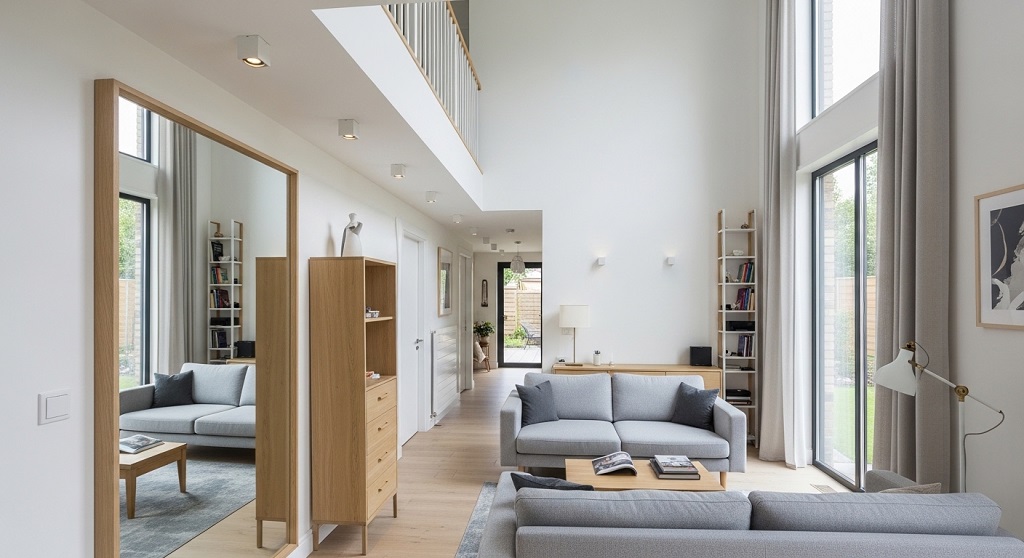
Answer Block: Layered lighting reduces shadows and increases perceived depth in small rooms. Combining ceiling lights, wall lights, and floor lamps distributes brightness evenly, eliminating dark corners that visually shrink interiors and making spaces feel wider and taller.
Lighting affects perceived room size more than most homeowners realize.
Single ceiling fixtures create uneven brightness. Corners remain dark and visually compressed.
Instead, use layered lighting:
- Ambient lighting for general brightness
- Task lighting for function
- Accent lighting for depth
Wall-mounted lights free floor space while improving illumination.
Warm white bulbs between 2700K and 3000K create comfortable brightness without harsh contrast.
Floor lamps placed near corners visually expand wall distance.
Natural light should remain unobstructed whenever possible.
Does Decluttering Really Make a House Look Larger?
Answer Block: Removing visible clutter increases perceived space by reducing visual noise and improving movement flow. Clear surfaces, hidden storage solutions, and organized layouts allow the eye to travel smoothly across a room, making interiors appear wider and more structured.
Clutter reduces usable space visually before it reduces space physically.
Even small objects create crowding when grouped together.
Start with these areas:
- Coffee tables
- Kitchen counters
- Entry shelves
- Bedside tables
Use concealed storage whenever possible.
Closed cabinets create cleaner visual lines than open shelving.
If open shelving is necessary, limit items to consistent colors or shapes.
Organized rooms appear larger because visual pathways remain uninterrupted.
How Can Vertical Space Make a Small Home Feel Bigger?
Answer Block: Using vertical storage increases functional capacity without reducing floor area. Tall shelves, ceiling-height curtains, and wall-mounted cabinets draw the eye upward, creating the illusion of higher ceilings and expanding perceived room volume.
Most homeowners underuse vertical space.
Walls provide storage opportunities without shrinking walking areas.
Install shelves closer to ceilings rather than mid-wall height.
This creates vertical emphasis and lifts perceived ceiling height.
Floor-to-ceiling curtains extend wall lines upward.
Wall hooks replace bulky storage units near entrances.
Vertical storage improves organization while maintaining openness.
Can Layout Changes Make a Small House Look Bigger Without Renovation?
Answer Block: Rearranging furniture to improve movement flow removes visual barriers and increases perceived openness. Aligning furniture along walls, maintaining clear walking paths, and reducing central obstacles allow rooms to feel wider without changing structure.
Furniture placement determines how easily the eye moves across a room.
Blocked pathways create instant visual compression.
Instead:
- Keep walkways clear
- Push large furniture against walls
- Angle rugs to guide movement direction
- Avoid placing furniture in entry sightlines
Open sightlines between rooms create continuity.
Maintaining consistent spacing between furniture pieces improves comfort and usability.
Even small adjustments produce noticeable spatial improvement.
Conclusion: Transform Your Small House Without Expanding It
Small homes rarely need structural expansion to feel spacious. Most space limitations come from visual barriers, inefficient furniture choices, poor lighting, and inconsistent color use.
By combining mirrors, vertical storage, layered lighting, decluttering strategies, and smart layout planning, you can dramatically increase perceived room size within days.
Start with the fastest improvements first. Clear surfaces. Improve lighting. Adjust furniture placement. Then upgrade colors and storage systems gradually.
These practical steps create lasting comfort and functionality without renovation costs.
If you apply even three of these strategies this week, your home will immediately feel brighter, more open, and easier to live in.
Frequently Asked Questions
What color makes a small house look bigger?
Light neutral colors such as white, beige, and soft gray reflect more light and reduce visual boundaries between walls, making rooms appear larger and more open.
Do mirrors really make rooms look bigger?
Yes. Mirrors reflect both natural and artificial light while extending sightlines beyond physical walls, creating the illusion of additional depth and width.
What type of furniture is best for small homes?
Slim-profile furniture with visible legs, built-in storage, and multi-purpose functionality increases usable floor space and reduces visual heaviness.
How can lighting improve small spaces?
Layered lighting removes shadows from corners and walls, improving brightness distribution and making interiors appear wider and taller.
Does removing clutter increase perceived space?
Yes. Decluttering reduces visual noise, improves movement flow, and allows the eye to travel smoothly across a room, making spaces feel larger.
Are vertical shelves good for small houses?
Vertical shelving maximizes storage capacity without using floor space and draws attention upward, increasing perceived ceiling height.
Can rearranging furniture make a room look bigger?
Yes. Aligning furniture along walls and maintaining clear walking paths removes visual barriers and increases perceived openness immediately.
Read More Also: These five features make your kitchen ahead of the game
Learn More: How to set the rent just right


