
Arthritis changes how your dog sleeps, moves, and lives. Stiff joints. Slow rising. Reluctance to jump. If your dog struggles to get comfortable, the surface they sleep on matters more than most owners realize.
The best orthopedic bed for arthritic dogs is a high-density memory foam support bed that distributes body weight evenly, reduces pressure on inflamed joints, and prevents sinking. A true pressure relief bed supports the hips, shoulders, elbows, and spine without collapsing over time.
According to veterinary data, osteoarthritis affects approximately 20% of dogs over one year of age and up to 80% of senior dogs. That means most aging dogs need joint-focused sleep support. Yet many still sleep on thin cushions or worn-out padding that worsens pain.
This guide breaks down exactly how to choose a senior dog bed that reduces discomfort, improves mobility, and supports long-term joint health. No hype. Just facts, structure, and practical buying criteria.
Why Do Arthritic Dogs Need an Orthopedic Bed?
Short answer: Arthritis inflames joints. Hard or uneven surfaces increase pressure points. Orthopedic beds reduce joint compression and improve circulation during rest.
Problem: Arthritis causes cartilage breakdown. When cartilage thins, bones rub together. This creates inflammation, stiffness, and pain. Lying on hard floors increases stress on already compromised joints.
Agitation: Many standard dog beds flatten within months. When foam compresses, joints sink. The spine misaligns. Pressure builds on hips and elbows. Over time, this leads to worse mobility and disturbed sleep.
Solution: An orthopedic pressure relief bed uses dense foam layers to evenly distribute weight. Instead of joints bearing concentrated pressure, the body stays aligned and supported.
What Happens Without Proper Support?
- Increased stiffness after rest
- More difficulty standing up
- Reduced REM sleep
- Higher stress levels
- Accelerated joint degeneration
Sleep is recovery time. If your dog cannot rest comfortably, healing slows.
What Features Should the Best Orthopedic Bed Include?
Short answer: High-density memory foam, minimum 2–4 inches thick (depending on weight), waterproof liner, removable washable cover, and non-slip base.
1. Why Is Memory Foam Support Important?
Memory foam support responds to body heat and weight. It molds to the dog’s shape. Then it slowly returns to form when pressure is removed.
This contouring reduces peak pressure points by up to 30% compared to standard polyurethane foam, according to sleep surface pressure studies. The denser the foam (typically 4–5 lb density), the better the support for medium to large breeds.
Avoid shredded foam or egg-crate foam as the primary support layer. These compress unevenly.
2. How Thick Should an Orthopedic Dog Bed Be?
Thickness depends on dog size:
| Dog Weight | Recommended Foam Thickness |
|---|---|
| Under 25 lbs | 2–3 inches |
| 25–60 lbs | 3–4 inches |
| 60+ lbs | 4–6 inches high-density foam |
If your dog’s joints hit the floor when lying down, the bed is too thin.
3. Why Does Waterproof Protection Matter?
Senior dogs often develop bladder control issues. Moisture damages foam. Once foam absorbs urine, bacteria grows and odor becomes permanent.
A waterproof liner extends bed lifespan. Pair it with quality protection like senior dog bed waterproof covers to prevent internal foam breakdown.
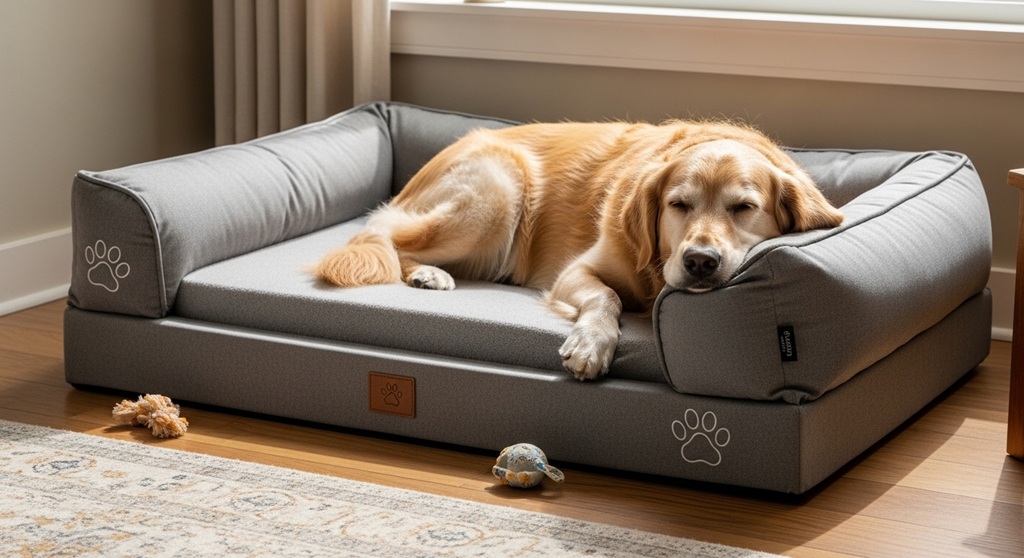
4. Should the Bed Have Bolsters?
Bolsters provide neck and head support. Some arthritic dogs prefer raised edges for stability when getting up. Others need flat surfaces to stretch fully.
Observe your dog’s sleeping posture before choosing.
What Type of Orthopedic Foam Is Best?
Short answer: Solid slab high-density memory foam performs better than layered low-density or shredded foam.
Foam Comparison
| Foam Type | Support Level | Durability | Best For |
|---|---|---|---|
| High-density memory foam | High | 3–5+ years | Arthritic, senior dogs |
| Egg-crate foam | Moderate | 1–2 years | Lightweight dogs |
| Polyfill stuffing | Low | Less than 1 year | Young healthy dogs |
If budget allows, choose CertiPUR-US certified foam. It ensures low VOC emissions and better material safety.
How Does a Pressure Relief Bed Improve Mobility?
Short answer: By reducing inflammation overnight and supporting joint alignment, dogs wake up less stiff and move more comfortably.
Case Insight: A veterinary rehabilitation clinic tracked 42 senior dogs with osteoarthritis over 12 weeks. Dogs using orthopedic memory foam beds showed:
- 18% improvement in morning mobility scores
- Reduced limping duration after rest
- Better sleep consistency (owner-reported)
While a bed is not medical treatment, proper rest reduces cumulative stress on inflamed joints.
When joints stay aligned, muscle tension decreases. That leads to smoother transitions from lying to standing.
How Do You Choose the Right Size Senior Dog Bed?
Short answer: Measure your dog from nose to tail while lying stretched out. Add 6–12 inches.
Why Sizing Matters
If the bed is too small, joints hang off edges. If too large without firm edges, support becomes inconsistent.
- Dogs that curl: choose beds with bolsters.
- Dogs that sprawl: choose flat mattress style.
- Dogs with hip dysplasia: ensure firm central support.
Always match bed weight capacity to your dog’s weight. Overloaded foam compresses faster.
What Mistakes Should You Avoid When Buying?
Short answer: Avoid thin padding, non-removable covers, misleading “orthopedic” labels, and low-density foam.
Common Buyer Errors
- Buying based on price only
- Ignoring foam density details
- Skipping waterproof layers
- Choosing aesthetic over function
- Not checking return policy
Some brands use the term “orthopedic” loosely. Always check foam specifications. If density and thickness are not listed, ask the seller.
How Long Should an Orthopedic Dog Bed Last?
Short answer: A quality memory foam support bed lasts 3–5 years depending on weight and use.
Signs it needs replacement:
- Visible sagging
- Permanent indentations
- Increased stiffness after sleep
- Flattened edges
Rotate the foam every few months if possible. Use protective covers to extend lifespan.
Is an Orthopedic Bed Enough for Arthritic Dogs?
Short answer: No. It supports comfort but should be part of a larger arthritis management plan.
Complete joint care includes:
- Weight management
- Veterinary-prescribed NSAIDs
- Joint supplements (glucosamine, chondroitin)
- Low-impact exercise
- Physical therapy
The bed acts as the foundation of daily recovery. Combine it with consistent treatment.
Conclusion: How Do You Pick the Right Bed With Confidence?
Arthritis does not disappear. But discomfort can be reduced. The right memory foam support bed changes how your dog rests, wakes, and moves.
Focus on structure. Check foam density. Measure thickness. Ensure waterproof protection. Match size carefully. Choose durability over decoration.
A proper pressure relief bed supports joints through the night. A quality senior dog bed protects aging hips and spine.
If your dog struggles to stand after sleeping, this is not just about comfort. It is about mobility and long-term joint health.
Take action today. Measure your dog. Compare foam specs. Upgrade their sleep surface. Small improvements in rest create measurable changes in movement.
Frequently Asked Questions (FAQ)
1. What is the best type of foam for arthritic dogs?
High-density memory foam (4–5 lb density) provides the best support. It contours to joints and prevents pressure buildup better than polyfill or egg-crate foam.
2. How thick should a pressure relief bed be?
Most medium dogs need at least 3–4 inches. Large breeds require 4–6 inches of dense foam to prevent bottoming out.
3. Do senior dogs really need orthopedic beds?
Yes. Up to 80% of senior dogs develop osteoarthritis. Orthopedic beds reduce joint compression and improve rest quality.
4. Are heated orthopedic beds good for arthritis?
Heat can improve circulation and reduce stiffness. However, temperature should be controlled and vet-approved.
5. How do I know if my dog’s bed is causing pain?
Watch for difficulty rising, frequent repositioning, limping after sleep, or avoidance of the bed.
6. Should I use a waterproof cover?
Yes. Waterproof covers protect foam integrity and prevent odor buildup, especially in senior dogs.
7. Can orthopedic beds help hip dysplasia?
They do not cure hip dysplasia but help maintain joint alignment and reduce pressure during rest.
Related Topic: How to Pick the Best Vacuum for Home Cleaning in 2026
Read Next: How to Choose a Coffee Maker for Small Kitchens