
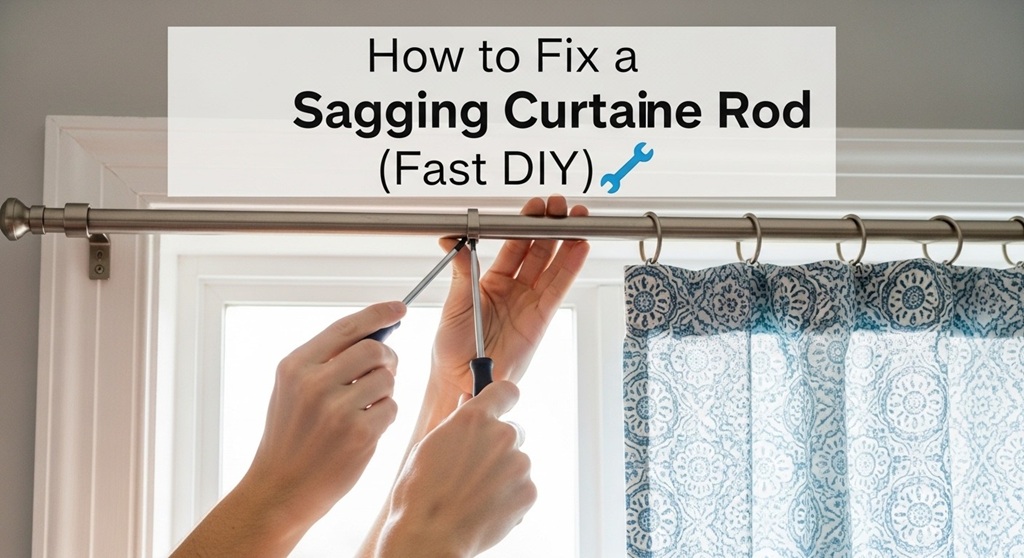
A sagging curtain rod happens when the rod bends or droops in the middle because it cannot support the weight of the curtains. This usually occurs when the rod lacks proper support brackets, the mounting screws loosen over time, or the curtain fabric is too heavy for the rod.
If ignored, the problem often gets worse. The rod may pull away from the wall, damage drywall anchors, or even fall completely. According to several home improvement reports from renovation platforms such as HomeAdvisor, curtain rods that exceed their recommended weight capacity fail up to 40% faster when installed without center brackets.
This means a small sag can quickly turn into wall damage or broken hardware.
The good news is that fixing a sagging curtain rod is usually a quick DIY project that takes less than 30 minutes. In most cases, you only need basic tools like a screwdriver, wall anchors, and a center support bracket.
In this guide, you’ll learn how to fix a sagging curtain rod step by step. We will cover the common causes, fast repair methods, and ways to prevent the problem in the future. Whether the issue comes from loose brackets, heavy curtains, or a weak rod, these simple fixes will help restore support and keep your curtain rod straight.
How Do You Fix a Sagging Curtain Rod Quickly?
Short Answer: The fastest way to fix a sagging curtain rod is to tighten the brackets, add a center support bracket, replace weak wall anchors, or upgrade to a stronger rod that can support the curtain weight.
Most sagging rods happen because of three issues: poor installation, weak mounting hardware, or excess curtain weight. Fixing the problem usually involves improving support.
The following sections explain the most effective solutions.
Why Does a Curtain Rod Start Sagging?
Short Answer: A curtain rod sags when the rod cannot evenly distribute the weight of the curtains across the brackets.
Several factors contribute to this problem:
- Loose mounting screws
- Weak drywall anchors
- Missing center support bracket
- Heavy blackout curtains
- Thin or low-quality rods
For example, interior design surveys show that blackout curtains can weigh between 6 and 12 pounds depending on fabric thickness and width. If a rod only supports 8 pounds but carries 12 pounds of curtain weight, sagging becomes unavoidable.
Identifying the exact cause will help you choose the correct fix.
How Can You Tighten Loose Curtain Rod Brackets?
Short Answer: Tightening loose brackets stabilizes the curtain rod and prevents movement that leads to sagging.
Loose screws are one of the most common causes of curtain rod sagging.
Follow these steps:
- Remove the curtain rod from the brackets.
- Use a screwdriver to tighten each bracket screw.
- If the screw spins freely, replace the anchor inside the wall.
- Reattach the rod and check for level alignment.
Over time, opening and closing curtains puts stress on brackets. Even slight movement can slowly loosen the screws.
Re-tightening them restores stability and can immediately remove the sag.
Do You Need a Center Support Bracket to Fix Curtain Rod Sagging?
Short Answer: Yes. Installing a center support bracket is the most reliable solution for long curtain rods.
Any rod longer than 48 inches typically needs a middle bracket. Without it, the rod must support all curtain weight from the two end brackets.
Adding a center bracket distributes weight evenly and prevents bending.
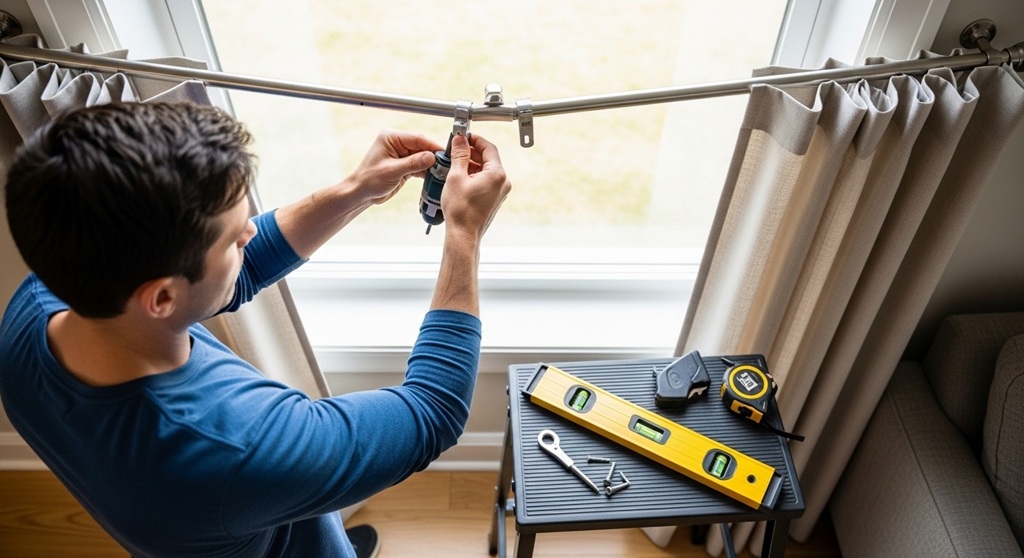
Steps to install a center support bracket:
- Measure the center point between the two end brackets.
- Mark the position with a pencil.
- Drill a pilot hole.
- Insert a drywall anchor.
- Screw the bracket securely into the wall.
Once installed, place the rod into the bracket and check that the rod remains straight.
Can Weak Wall Anchors Cause a Curtain Rod to Sag?
Short Answer: Yes. Weak or damaged drywall anchors can allow the bracket to pull away from the wall, causing the rod to tilt and sag.
Drywall alone cannot support heavy loads without anchors. If the anchor fails, the bracket shifts under weight.
Replacing anchors often solves the issue.
Steps to replace drywall anchors:
- Remove the bracket screws.
- Pull out the old anchors.
- Insert heavy-duty wall anchors.
- Reinstall the bracket with new screws.
Heavy-duty anchors can support up to 50 pounds depending on the type. This makes them ideal for thick curtains or long rods.
Should You Replace a Weak Curtain Rod?
Short Answer: If the rod itself bends easily, replacing it with a stronger metal rod prevents future sagging.
Many decorative curtain rods are designed for lightweight curtains. When heavier fabrics are used, the rod bends under pressure.
Consider upgrading to:
- Steel curtain rods
- Adjustable heavy-duty rods
- Double support rods
Heavy-duty rods typically support between 20 and 30 pounds. This is ideal for blackout curtains or layered window treatments.
How Can You Fix Curtain Rod Sagging Without Drilling?
Short Answer: Adhesive curtain rod brackets can temporarily support lightweight curtains without drilling holes.
Adhesive brackets use strong mounting strips to attach to the wall.
However, they work best with:
- Sheer curtains
- Lightweight fabrics
- Short rods
They are not recommended for heavy curtains because adhesive strength decreases over time.
This method is useful for renters who want to avoid drilling holes.
How Do Professionals Prevent Curtain Rod Sagging?
Short Answer: Professionals prevent sagging by balancing curtain weight, rod strength, and bracket placement.
Interior installation guides often recommend a simple rule:
| Curtain Rod Length | Recommended Brackets |
|---|---|
| Up to 48 inches | 2 brackets |
| 48–72 inches | 3 brackets |
| 72–120 inches | 4 brackets |
This bracket spacing distributes weight evenly and prevents bending.
Another best practice is choosing rods rated for at least twice the curtain weight.
What Tools Do You Need to Fix a Sagging Curtain Rod?
Short Answer: Most fixes require only basic household tools.
Common tools include:
- Screwdriver
- Power drill
- Wall anchors
- Pencil
- Measuring tape
- Level tool
These tools allow you to tighten brackets, add new supports, and reposition hardware if necessary.
How Long Does It Take to Fix a Sagging Curtain Rod?
Short Answer: Most repairs take between 15 and 30 minutes.
The timeline depends on the repair type.
| Repair Type | Estimated Time |
|---|---|
| Tightening screws | 10 minutes |
| Installing center bracket | 20 minutes |
| Replacing rod | 30 minutes |
This makes it one of the easiest DIY home maintenance tasks.
How Can You Prevent Curtain Rod Sagging in the Future?
Short Answer: Proper installation and balanced weight prevent sagging.
Follow these simple practices:
- Use a center bracket for rods longer than 48 inches.
- Choose heavy-duty rods for thick curtains.
- Install strong wall anchors.
- Check bracket screws every few months.
Preventive maintenance ensures your curtain rod remains straight and secure for years.
Conclusion: Is Fixing a Sagging Curtain Rod Worth It?
A sagging curtain rod may seem like a minor problem, but ignoring it can lead to damaged walls, broken brackets, or fallen curtains. The good news is that fixing the issue is quick and inexpensive.
Most repairs require tightening brackets, adding a center support bracket, or replacing weak anchors. In some cases, upgrading to a stronger rod solves the problem permanently.
With the right tools and a few minutes of work, you can restore stability and prevent future sagging.
If your curtain rod currently droops in the middle, try one of the methods in this guide today. A simple fix can instantly improve both the appearance and functionality of your window setup.
Start with the easiest solution first—tighten the brackets—and work your way through the other steps if needed.
Your curtains will hang straight again in no time.
Frequently Asked Questions (FAQs)
How do I fix a curtain rod that keeps falling?
If a curtain rod keeps falling, the brackets may be installed in weak drywall without proper anchors. Replace the anchors with heavy-duty wall anchors and tighten the bracket screws securely.
Why does my curtain rod bend in the middle?
A curtain rod bends in the middle when it supports more weight than it was designed for. Adding a center support bracket or replacing the rod with a heavy-duty version can solve the problem.
Can heavy curtains cause curtain rods to sag?
Yes. Thick fabrics such as blackout curtains or thermal curtains are significantly heavier than standard curtains. If the rod is not rated for the extra weight, sagging can occur.
What type of curtain rod prevents sagging?
Steel or heavy-duty metal rods with multiple brackets are the most reliable option. These rods can support heavier curtains without bending.
How far apart should curtain rod brackets be?
For most installations, brackets should be spaced every 40–48 inches. Long rods should always include a center bracket for additional support.
Do tension rods sag over time?
Yes. Tension rods rely on pressure rather than screws, so they may lose grip over time. They work best with lightweight curtains.
Is it better to drill into studs for curtain rods?
Yes. Mounting brackets directly into wall studs provides the strongest support and significantly reduces the chance of sagging.
Read More Also: Three Knitting Tips for Beginners
Find out: How to Pick the Best Orthopedic Bed for Arthritic Dogs


