

Picture this: you walk into a living room that feels instantly calming. Clean lines meet plush textiles. Neutral tones embrace you like a warm hug. There’s space to breathe, yet everything feels intentionally cozy. This is the magic of a warm minimalist living room a design philosophy that strips away the cold, sterile edge of traditional minimalism and replaces it with comfort, texture, and soul.
What Makes a Living Room “Warm Minimalist”?
A warm minimalist living room combines the clean, uncluttered aesthetic of minimalism with inviting, cozy elements that make the space feel lived-in and comfortable.
The foundation lies in intentional simplicity. You select fewer furniture pieces, but each one serves a purpose and adds visual value. The difference from cold minimalism? You incorporate warmth through texture, natural materials, and a softer color palette.
Key characteristics include:
- Neutral color schemes with warm undertones like beige, cream, taupe, and soft whites
- Natural materials such as wood, linen, cotton, wool, and stone
- Layered textures through throw pillows, area rugs, woven baskets, and textile art
- Quality over quantity with well-crafted furniture that stands the test of time
- Functional decor that serves both practical and aesthetic purposes
- Natural light maximized through strategic window treatments
This design approach originated from Scandinavian and Japanese aesthetics, where comfort and functionality merge seamlessly. The result? A space that calms your mind while wrapping you in subtle comfort.
How Do You Choose the Perfect Color Palette for Soft Neutral Living Room Ideas?
The ideal warm minimalist color palette features soft neutrals with warm undertones: think sandy beige, creamy ivory, warm taupe, soft greige, and gentle caramel tones.
Start with a base neutral for your walls. Warm white or light beige creates an airy foundation without the starkness of pure white. These colors reflect natural light beautifully while maintaining that cozy atmosphere you’re after.
Layer in secondary neutrals through furniture and textiles. A linen sofa in oatmeal, complemented by camel-colored throw pillows and a cream wool rug, builds depth through subtle variation. The key? Stay within the same warm temperature family to maintain cohesion.
Add visual interest with tonal contrast. Pair lighter walls with slightly deeper furniture tones, or vice versa. A light oak coffee table against a warm taupe sofa creates dimension without introducing jarring color shifts.
Consider these strategic color combinations:
- Warm white walls + beige upholstery + tan accents
- Cream walls + caramel leather seating + ivory textiles
- Soft grey walls with warm undertones + natural wood + off-white fabrics
- Sandy beige walls + linen neutrals + terracotta accents (sparingly)
Introduce one or two subtle accent colors if desired. Sage green, dusty blue, or muted terracotta can add personality while maintaining the serene atmosphere. Use these sparingly—think a single throw pillow or a small ceramic piece.
Why Are Layered Textures and Textiles Essential in Warm Minimalism?
Layered textures and textiles prevent minimalist spaces from feeling cold or empty by adding visual and tactile richness without introducing clutter.
In warm minimalism, texture does the heavy lifting that color and pattern might do in other design styles. When you limit your color palette and furniture quantity, texture creates the depth and interest that makes a room feel complete.
Think about it this way: a plain white room with a white sofa feels sterile. But add a chunky knit throw, linen pillows, a jute rug, and a woven basket? Suddenly the space has dimension, warmth, and character—all while maintaining visual simplicity.
Strategic textile layering techniques:
- Mix fabric weights: Combine lightweight linen curtains with heavier wool throws
- Vary weave patterns: Pair smooth cotton with chunky knits or loose-weave fabrics
- Contrast surfaces: Soft textiles against smooth wood or cool stone
- Layer rugs: Place a smaller textured rug over a larger natural fiber one
- Stack pillows: Use different sizes and textures in complementary neutral tones
Focus on natural, tactile materials. Linen, cotton, wool, jute, and sisal bring organic warmth. These materials age beautifully and feel inviting to touch—critical in spaces designed for relaxation.
Don’t forget vertical texture. Woven wall hangings, textured wallpaper on an accent wall, or even exposed brick adds dimension at eye level, making rooms feel more dynamic and engaging.
What Furniture Pieces Work Best in a Warm Minimalist Living Room?
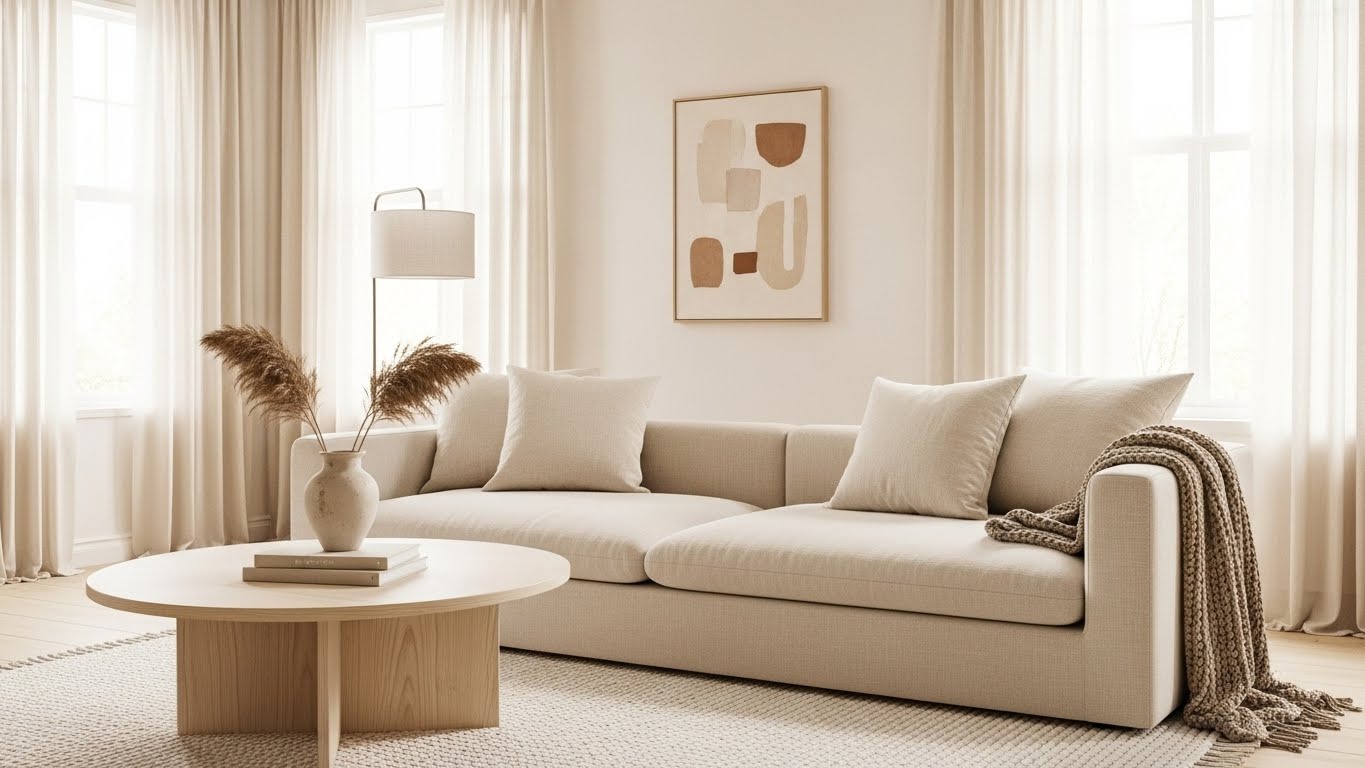
Select furniture with clean lines, natural materials, and comfortable proportions—pieces like low-profile sofas in neutral upholstery, solid wood coffee tables, and streamlined storage that conceals clutter.
Your sofa anchors the entire room. Choose one with simple silhouettes but plush cushioning. A linen or bouclé sofa in cream, beige, or warm grey provides comfort while maintaining that minimalist aesthetic. Avoid overly ornate designs with busy patterns or excessive detailing.
Coffee tables should be functional and beautiful. Solid wood options in light oak, walnut, or maple add natural warmth. Consider organic shapes like oval or rounded rectangular designs that soften the space while maintaining clean lines.
Essential furniture pieces include:
- Comfortable seating: A quality sofa plus one or two accent chairs in complementary textures
- Functional coffee table: Preferably with hidden storage to maintain the clutter-free aesthetic
- Minimal side tables: Simple designs in wood or stone that hold essentials without visual weight
- Low-profile media console: Clean-lined storage that conceals electronics and accessories
- Open shelving or credenza: For displaying curated objects while providing storage
Prioritize quality over quantity. One exceptional sofa beats three mediocre pieces. Invest in furniture that’s well-constructed from natural materials—these pieces age gracefully and feel luxurious to use daily.
Scale matters tremendously. Furniture should be proportionate to your room size. In smaller spaces, choose pieces with visible legs that create visual breathing room. In larger rooms, don’t be afraid of substantial furniture that grounds the space without overwhelming it.
How Can You Add Warmth Through Lighting in Minimalist Spaces?
Layer multiple light sources at different heights using warm-toned bulbs (2700-3000K) to create ambient, task, and accent lighting that enhances coziness while maintaining clean aesthetics.
Natural light remains your primary source. Keep window treatments minimal—sheer linen curtains or light-filtering roller shades maximize daylight while providing privacy when needed. Natural light changes throughout the day, adding organic variation to your neutral palette.
For artificial lighting, think in layers:
- Ambient lighting: Recessed ceiling lights or a simple pendant fixture provides overall illumination
- Task lighting: Floor lamps beside reading chairs or table lamps on side tables for functional brightness
- Accent lighting: Wall sconces or picture lights highlighting artwork or architectural features
- Mood lighting: Candles in ceramic holders or LED strips behind furniture for evening ambiance
Choose fixtures with clean, sculptural designs. A simple arc floor lamp in matte black or brass, a ceramic table lamp with a linen shade, or minimal pendant lights with warm glass shades all complement warm minimalist aesthetics.
Dimmer switches are non-negotiable. They let you adjust lighting intensity based on time of day and activity, transforming your space from bright and energizing to soft and relaxing with a simple turn.
Avoid harsh, cool-toned lighting. It counteracts all the warmth you’ve carefully built through color and texture. Stick with warm white bulbs that cast a gentle, golden glow similar to natural evening light.
What Role Do Natural Materials Play in Creating Warmth?
Natural materials like wood, stone, linen, and wool bring organic texture, visual warmth, and a connection to nature that softens minimalist aesthetics and makes spaces feel more inviting.
Wood stands as the cornerstone material. Light woods like oak, ash, or maple feel airy and Scandinavian. Darker woods like walnut add richness. Whether in flooring, furniture, or decorative objects, wood grain adds subtle pattern that doesn’t overwhelm.
Stone and ceramic introduce earthy solidity. A travertine coffee table, terracotta planters, or a ceramic vase collection brings natural variation in tone and texture. These materials feel substantial and grounding without heaviness.
Natural fibers elevate comfort significantly:
- Linen: Curtains, throw pillows, and upholstery with a relaxed, lived-in texture
- Wool: Rugs and throws that add softness and temperature regulation
- Cotton: Breathable, versatile for various applications from cushions to blankets
- Jute and sisal: Textured rugs that anchor spaces with organic appeal
- Rattan and wicker: Baskets and occasional furniture pieces for visual interest
These materials age beautifully. Unlike synthetic alternatives that can look worn, natural materials develop character over time. A linen sofa becomes softer, wood develops patina, and wool rugs gain depth—all contributing to that warm, lived-in feeling.
Mix materials strategically. Pair smooth wood with rough-textured textiles. Combine cool stone with warm fabrics. This contrast creates sensory richness while maintaining visual simplicity.
How Do You Prevent a Warm Minimalist Space from Feeling Too Sparse?
Balance simplicity with strategic layering by adding plush textiles, incorporating plants, displaying curated personal items, and ensuring furniture is comfortable rather than just aesthetically minimal.
The line between minimalist and sparse is thin, but intentionality makes all the difference. Every item in your room should serve a purpose—functional, aesthetic, or emotional.
Plants breathe life into minimalist spaces. Large floor plants like fiddle leaf figs or birds of paradise make dramatic statements. Smaller plants in ceramic pots add organic shapes without clutter. Greenery introduces gentle movement and connects your interior to the natural world.
Strategic decor placement prevents emptiness:
- Group items in odd numbers (three candles, five books) for visual interest
- Use negative space intentionally—it makes displayed items feel more important
- Display books with beautiful spines on open shelving
- Rotate seasonal items to keep the space feeling fresh
- Include one or two meaningful personal items that tell your story
Textiles are your secret weapon against sparseness. A generously sized area rug defines the seating area and adds comfort underfoot. Multiple throw pillows (yes, more than two) in varying sizes and textures make sofas inviting. A chunky knit throw draped casually over a chair signals comfort.
Consider scale and proportion. In larger rooms, don’t be afraid of substantial furniture and artwork. A too-small sofa in a big room emphasizes emptiness rather than minimalism. Fill the space appropriately while maintaining breathing room.
Remember: warm minimalism celebrates quality of life, not deprivation. If removing something makes your space less comfortable or functional, keep it. The goal is peaceful simplicity, not sacrifice.
What Are the Best Window Treatment Options for This Style?
Choose simple, light-filtering window treatments like sheer linen curtains, natural woven shades, or minimal roller blinds in neutral tones that maximize natural light while providing privacy.
Linen curtains reign supreme in warm minimalist design. Floor-to-ceiling curtains in white, cream, or beige diffuse harsh sunlight while maintaining brightness. They add soft movement and vertical texture without competing for attention.
Installation details matter. Mount curtain rods close to the ceiling and let panels hang to the floor (or slightly pool) for an elegant, expansive feel. This vertical emphasis makes ceilings appear higher and windows larger.
Alternative options include:
- Woven wood shades: Natural bamboo or grasses add organic texture
- Roman shades: In linen or cotton for a tailored, streamlined look
- Sheer roller blinds: Minimalist hardware with light-filtering fabric
- No treatments: In private settings with beautiful views, bare windows work perfectly
Avoid heavy drapes, busy patterns, or overly decorative hardware. These elements contradict the clean aesthetic you’re cultivating. Stick with simple rods in matte finishes like brass, black, or wood that complement your overall palette.
Layer for functionality. Sheer curtains for daytime privacy paired with hidden blackout shades for light control offers flexibility without sacrificing style. Keep the blackout layer concealed when not in use to maintain the minimalist appearance.
How Can You Personalize a Warm Minimalist Living Room Without Adding Clutter?
Personalize through curated collections, meaningful artwork, distinctive textures, and items that reflect your lifestyle—displayed thoughtfully rather than scattered throughout the space.
Quality artwork makes powerful personal statements. One large piece above the sofa or a small gallery wall of 3-5 frames creates impact without chaos. Choose art with personal meaning in frames that complement your neutral palette.
Books add personality and warmth. Style them horizontally and vertically on open shelves, keeping only those you love or reference. Beautiful spines become part of your color scheme—an acceptable way to introduce subtle pattern and variation.
Smart personalization strategies:
- Display collections in contained areas (pottery on one shelf rather than scattered)
- Rotate decorative items seasonally to keep things fresh
- Choose functional items with beautiful design (handmade ceramics, artisan cutting boards)
- Incorporate family photos in simple, matching frames
- Select coffee table books that reflect your interests and aesthetic
Hobbies and interests can integrate beautifully. A guitar on a wall mount becomes sculptural art. A vintage camera collection on a shelf tells your story. The key? Intentional display rather than accidental accumulation.
The “one in, one out” rule maintains balance. When adding something new, remove something old. This discipline keeps your space from gradually accumulating clutter while allowing evolution and refresh.
Trust your instincts. If something brings joy and fits your aesthetic, include it. Warm minimalism shouldn’t feel restrictive—it should free you from unnecessary possessions while celebrating what truly matters.
Conclusion
Creating a warm minimalist living room isn’t about following rigid rules or stripping away everything you love. It’s about intentional curation—choosing quality over quantity, texture over pattern, and comfort alongside simplicity.
The soft neutral living room ideas, layered textures and textiles, and natural materials we’ve explored transform cold minimalism into inviting spaces that genuinely feel like home. You’re not creating a magazine showroom that’s untouchable. You’re designing a retreat where you can relax, recharge, and truly live.
Start small. Choose one or two strategies from this guide and implement them thoughtfully. Maybe begin with a new neutral throw pillow collection, or invest in that linen sofa you’ve been eyeing. Layer a jute rug under your existing one. Each small change compounds, gradually transforming your space.
Remember that warm minimalism is deeply personal. Your retreat should reflect how you live, what you value, and what brings you peace. Use these principles as guidelines, not commandments, adapting them to your unique lifestyle and preferences.
Ready to transform your living room into a warm minimalist haven? Start by evaluating your current space—identify one element to simplify and one texture to add. Share your warm minimalist journey in the comments below, or subscribe to our newsletter for more design inspiration delivered weekly.
Frequently Asked Questions
What’s the difference between warm minimalism and Scandinavian design?
Warm minimalism and Scandinavian design share many principles but differ in execution. Scandinavian design often incorporates more contrast (black and white), graphic patterns, and functional design objects as focal points. Warm minimalism leans even softer with monochromatic neutral palettes, prioritizes texture over pattern, and creates a more serene, less visually stimulating environment. Both value natural materials and simplicity, but warm minimalism skews cozier and more texture-focused.
Can you have a warm minimalist living room with kids and pets?
Absolutely. Choose performance fabrics in neutral tones that resist stains and wear. Crypton, Sunbrella, and treated linens offer durability without sacrificing aesthetics. Opt for furniture with removable, washable covers. Use baskets and concealed storage for toy organization. Select darker neutral tones (taupe, warm grey) that hide minor imperfections better than pure white. The key is durability disguised as design—making practical choices that maintain your aesthetic vision.
How much does it cost to create a warm minimalist living room?
Costs vary dramatically based on room size, existing furniture, and quality preferences. You can start with budget-friendly updates ($500-1000) by adding textiles, repainting in warm neutrals, and decluttering. A moderate refresh with new furniture pieces runs $3000-7000. High-end complete renovations with custom furniture and architectural changes can exceed $15,000. Prioritize one quality investment piece (like a sofa) and build around it gradually. Warm minimalism actually saves money long-term by reducing impulse purchases and focusing on fewer, better items.
What are the biggest mistakes people make with warm minimalist design?
The most common mistakes include: choosing pure white instead of warm neutrals (creating coldness), removing too much texture (resulting in sterile spaces), prioritizing aesthetics over comfort (making rooms uninviting), neglecting lighting variety (creating flat, one-dimensional spaces), and using too little furniture (emphasizing emptiness rather than simplicity). Remember that minimalism means intentional, not empty. Each element should serve purpose and contribute to overall warmth.
How do you maintain a warm minimalist living room long-term?
Establish simple daily habits: return items to designated spots, avoid surface clutter accumulation, and implement the “one in, one out” rule for new purchases. Deep clean seasonally, rotating textiles and refreshing arrangements. Invest in quality pieces that age well rather than trendy items requiring frequent replacement. Create storage systems that make organization effortless. The goal is sustainable simplicity, not constant perfection. A well-designed warm minimalist space should be low-maintenance by nature.
Can you mix warm minimalism with other design styles?
Yes, warm minimalism serves as an excellent foundation that complements other aesthetics. It pairs beautifully with modern organic, Japandi (Japanese-Scandinavian fusion), coastal design, and contemporary styles. The key is maintaining the core principles—neutral palette, quality over quantity, natural materials—while introducing style-specific elements sparingly. For example, add mid-century modern furniture pieces, incorporate bohemian textiles, or include industrial lighting fixtures, but always let simplicity and warmth remain the dominant themes.
What paint colors work best for warm minimalist living rooms?
Ideal paint colors include warm whites with creamy or beige undertones (Benjamin Moore’s White Dove, Sherwin Williams’ Alabaster), soft beiges (Accessible Beige, Balanced Beige), warm greys with brown undertones (Agreeable Grey, Repose Grey), and light taupes (Kilim Beige, Natural Linen). Test samples in your space throughout the day, as lighting dramatically affects how these subtle neutrals appear. Avoid stark whites, cool greys, and colors with pink undertones, which can feel cold or institutional rather than warm and inviting.
Related Topics: Are Cheap Plumbers Near Me Reliable for Complicated Repairs?
Related Topics: Best Quick-Dry Spa Bath Pillows for Bathtubs in 2025


