
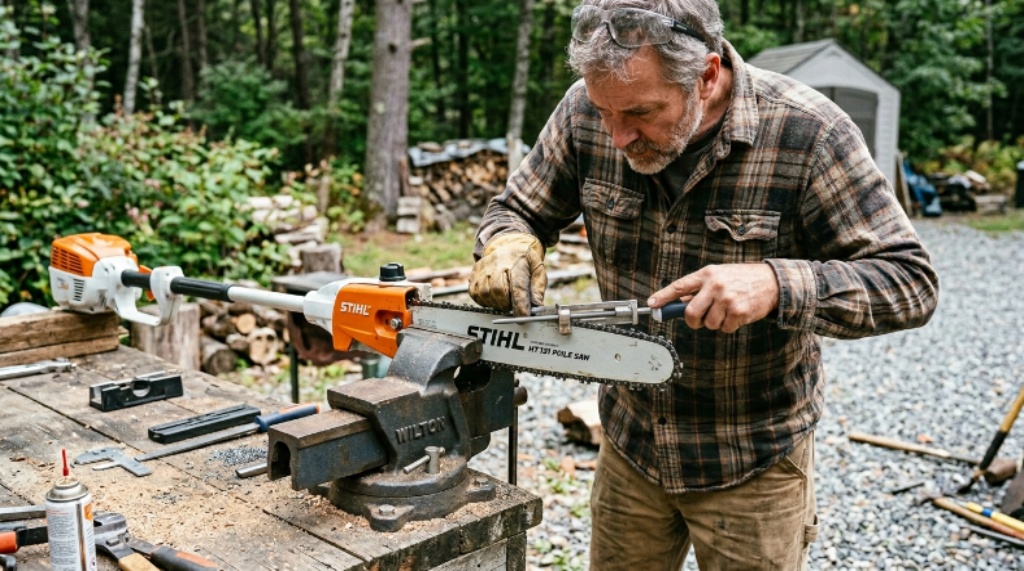
A pole saw is one of the most useful tools you can own for yard work. It lets you trim high branches safely from the ground, saving you from climbing ladders with a chainsaw. However, like any cutting tool, a pole saw only performs well when it is properly maintained.
Neglecting maintenance leads to dull blades, sluggish cuts, and premature wear on every component. Over time, a poorly maintained pole saw becomes frustrating to use and expensive to repair or replace. The good news is that keeping your pole saw in excellent condition does not require specialist knowledge. A consistent routine with the right habits is all it takes.
This guide covers everything you need to know about maintaining your pole saw for long-term performance, from routine cleaning to bar lubrication and safe storage.
Why Regular Maintenance Matters
Every time you use a pole saw, it collects resin, wood chips, oil residue, and dust. These materials build up in the chain, along the guide bar, and around the motor housing. Left unchecked, that buildup increases friction, reduces cutting efficiency, and puts unnecessary strain on the engine or motor.
Additionally, a well-maintained pole saw is a safer one. A dull or clogged chain is more likely to kick back or bind during a cut. Keeping all components clean and sharp reduces the risk of accidents during use. Therefore, maintenance is not just about performance. It is also about protecting yourself every time you pick up the tool.
Understanding the Main Components of a Pole Saw
Before diving into maintenance steps, it helps to understand what you are working with. A pole saw consists of several key parts, each of which needs specific attention.
The guide bar is the long, flat metal piece that the chain runs around. The chain is the cutting element, made up of linked teeth that do the actual work. The sprocket drives the chain and sits at the tip of the guide bar. The oiler system lubricates the chain automatically during use. Finally, the pole itself, whether fixed or telescoping, connects the cutting head to the handle.
Each of these components plays a role in how well and how safely your pole saw operates. Maintaining all of them equally is essential.
Cleaning Your Pole Saw After Every Use
Cleaning pole saw components after each session is the single most important maintenance habit you can build. It takes only a few minutes and prevents a long list of future problems.
What You Will Need
Gather these items before you start:
- A stiff-bristled brush or an old toothbrush
- A flat-head screwdriver
- Rags or shop towels
- A mild degreaser or soapy water
- Protective gloves
Always disconnect or power down the pole saw completely before cleaning. For battery models, remove the battery. For petrol models, disconnect the spark plug lead.
Removing Debris from the Chain and Bar
Start by removing the guide bar and chain. Most pole saws have a side cover that comes off with a few turns of a bar nut. Once removed, use the brush to clear away all sawdust, wood chips, and resin from the bar groove. The groove is the narrow channel that the chain sits in, and it clogs up quickly with use.
Use the screwdriver to carefully clear the oil inlet holes on the bar. These small holes feed lubricant to the chain, and blocked holes mean the chain runs dry. Running a dry chain causes rapid wear on both the chain and the bar.
Cleaning the Chain
Wipe the chain down with a rag dampened with a mild degreaser. Work along each link individually, paying close attention to the drive links and the area around the cutting teeth. Resin and dried sap are stubborn, so a short soak in a container of degreaser for five to ten minutes can help loosen heavy buildup before wiping.
Once clean, rinse the chain with clean water and allow it to dry fully before reassembling. Reassemble the bar and chain, then apply a light coat of bar and chain oil before storage.
Cleaning the Motor Housing and Pole
Wipe down the exterior of the motor housing with a damp cloth. Avoid spraying water directly onto any electrical components. For petrol models, check the air filter and clear away any dust or debris blocking the intake. A blocked air filter reduces engine power noticeably.
Wipe down the pole with a dry cloth. If the pole is telescoping, extend it fully and clean along the joint area where segments overlap. Dirt trapped in this area can make the pole stiff and difficult to adjust over time.
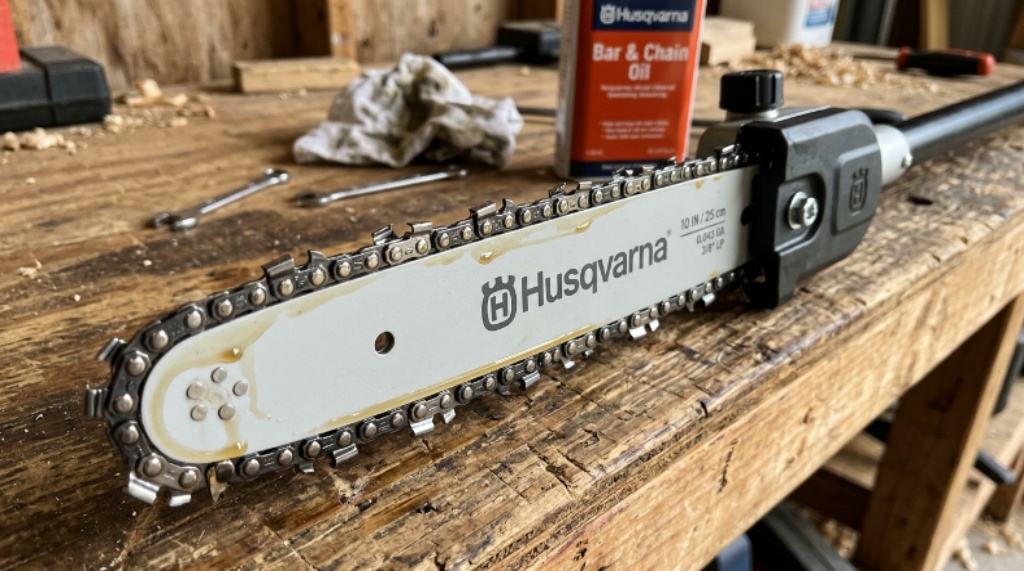
Blade Sharpening: Keeping Your Chain Cutting Efficiently
A clean chain still needs to be sharp to cut well. Blade sharpening is a core part of pole saw maintenance that many owners skip until performance has already declined significantly. That is a mistake. A sharp chain cuts faster, puts less strain on the motor, and produces cleaner cuts on branches.
How to Tell When the Chain Needs Sharpening
There are clear signs that sharpening is overdue. The saw starts producing fine dust instead of wood chips during cutting. You find yourself pressing down on branches rather than letting the chain do the work. The cut drifts to one side instead of going straight. Any of these signs means it is time to sharpen.
Using a Round File to Sharpen the Chain
Sharpening a pole saw chain requires a round file that matches the diameter of your chain’s cutters. Common sizes are 4 mm, 4.8 mm, and 5.5 mm. Check your owner’s manual or the chain packaging to confirm the correct size for your model.
Secure the guide bar in a vice or clamp it to a stable surface. Work on one cutter at a time. Hold the file at the correct angle, typically between 25 and 35 degrees depending on your chain type, and push the file through the cutter in smooth, consistent strokes. Use the same number of strokes on each cutter to keep the chain balanced.
Work along one side of the chain first, then rotate the bar and repeat on the other side. Additionally, check the depth gauges, the small rakers in front of each cutter, and file them down if they sit too high above the cutter teeth. A depth gauge tool makes this step straightforward.
When to Use a Professional Sharpening Service
If the cutters are severely worn, unevenly shaped, or if individual teeth are damaged or missing, professional sharpening or chain replacement is the better option. Most tool shops and hardware stores offer chain sharpening services at a low cost. However, for regular maintenance sharpening, doing it yourself is a practical skill that saves both time and money over the long term.
Lubricating the Bar and Chain
Lubrication is what allows the chain to move smoothly around the bar without generating damaging friction. Most pole saws have an automatic oiler that delivers bar and chain oil during operation. However, the oiler system needs checking regularly to ensure it is functioning correctly.
Before each session, check the oil reservoir and top it up if needed. Use only bar and chain oil, not motor oil or general-purpose lubricants. These alternatives do not have the correct viscosity and can cause premature wear.
After refitting a cleaned chain, apply a small amount of oil manually before the first cut. This ensures lubrication reaches the bar groove immediately rather than waiting for the oiler to catch up.
Inspecting and Replacing Worn Parts
Maintenance is not only about cleaning and sharpening. It also involves inspecting components for wear and replacing them before they cause bigger problems.
Checking the Guide Bar
Examine the guide bar for uneven wear along the edges of the groove. If one side of the groove has worn down more than the other, the bar can be flipped to even out the wear and extend its life. Look also for burrs or cracks along the bar rails and file them smooth if present.
Replace the guide bar if the groove is excessively worn, the bar is bent, or it shows signs of cracking. A damaged bar affects chain tracking and makes cutting unpredictable.
Inspecting the Drive Sprocket
The drive sprocket transfers power from the motor to the chain. Over time, the teeth on the sprocket wear down and the chain starts to ride unevenly. A good rule of thumb is to replace the sprocket every two to three chains, as pairing a new chain with a worn sprocket accelerates wear on both components.
Checking the Chain Tension
A correctly tensioned chain sits snugly against the bar but can still be pulled along manually with a gloved hand. A chain that is too loose can derail during cutting. One that is too tight puts excessive strain on the motor and bar. Check tension before every session and adjust using the tensioning screw on the side cover.
Storing Your Pole Saw Correctly
How you store your pole saw between uses affects how well it performs when you need it next.
Always store the saw with a bar and chain cover fitted. This protects both you and the chain from accidental contact and prevents dust from settling on the lubricated surfaces. Store the pole saw in a dry location, away from direct sunlight and temperature extremes.
For petrol models, drain the fuel if the saw will be stored for longer than 30 days. Stale fuel degrades and can gum up the carburettor, leading to difficult starting and poor engine performance. For battery models, store the battery at around 50 percent charge in a cool, dry location.
Additionally, a light coat of oil on the bar and chain before long-term storage prevents rust from forming on metal surfaces during periods of high humidity.
Conclusion
Keeping your pole saw in top condition is straightforward when you build the right habits. Start with thorough cleaning pole saw components after every session to prevent buildup from degrading performance. Practice regular blade sharpening to keep cuts fast, clean, and efficient. Check and maintain lubrication levels before every use, and inspect key components like the bar, sprocket, and chain tension on a consistent schedule.
Store your pole saw properly between sessions, and address worn parts before they cause bigger problems. With these steps in place, your pole saw will deliver reliable, long-lasting performance and stay safe to use for many years to come.
Frequently Asked Questions
How often should I sharpen my pole saw chain?
Sharpen the chain after every five to ten hours of use, or sooner if you notice the saw producing dust instead of chips or requiring extra pressure to cut. The frequency depends on how hard the wood is and how often you use the saw.
What type of oil should I use for a pole saw chain?
Always use bar and chain oil specifically designed for chainsaws and pole saws. It has the correct viscosity to cling to the chain during high-speed operation. Avoid motor oil, vegetable oil, or general lubricants, as these do not perform the same way and can cause premature wear.
Can I use a pole saw in wet conditions?
It is best to avoid using a pole saw in rain or on wet branches if possible. Wet wood can clog the chain more quickly, and wet conditions increase the risk of slipping or electrical hazards with corded electric models. If you must work in damp conditions, clean and dry the saw thoroughly afterward.
How do I know when to replace the chain rather than sharpen it?
Replace the chain when the cutters have been filed down to the point where very little metal remains on the tooth face, when multiple teeth are damaged or missing, or when the chain consistently cuts unevenly despite sharpening. A heavily worn chain is a safety risk and should not be used.
How do I stop resin from building up on my pole saw bar and chain?
Resin builds up naturally from tree sap during cutting. Cleaning after every use and keeping the chain well-lubricated slows this buildup significantly. For heavy resin deposits, soak the chain in a mild degreaser before wiping clean. Avoid cutting through pine or similar resinous trees in quick succession without cleaning in between.