Setting up a kitchen from scratch does not have to cost a fortune. Many people assume that cooking well at home requires expensive equipment and a fully stocked pantry of gadgets. However, the reality is quite different. A thoughtful selection of affordable, versatile tools is all you need to prepare a wide range of meals confidently and efficiently.
Whether you are moving into your first apartment, starting over, or simply trying to cook more at home, this guide is for you. It walks through the most important kitchen basics you should own, explains why each one earns its place, and shows you how to build a complete setup without overspending.
Starting With the Right Mindset About Kitchen Tools
Before spending a single dollar, it helps to think clearly about what you actually need. Kitchen stores and online marketplaces are full of products that promise to make cooking easier. Most of them collect dust within a month of purchase.
The key is to focus on tools that serve multiple purposes. A good chef’s knife, for example, can chop, slice, dice, and mince. It replaces a drawer full of specialty knives that do only one job. Therefore, prioritizing versatility is the smartest way to build a budget kitchen that actually works.
Additionally, quality matters more than quantity. One well-made pan outperforms three cheap ones in both performance and lifespan. Spending a little more on a few core items means you replace them less often, saving money in the long run.
Knives: The Most Important Purchase You Will Make
Every cook needs at least one good knife. A sharp, comfortable chef’s knife handles the vast majority of kitchen cutting tasks. It is the single most essential cooking tool in any home kitchen, regardless of budget.
Choosing Your First Chef’s Knife
Look for a knife between 20 and 25 centimetres in length with a full tang, meaning the metal blade extends all the way through the handle. This construction makes the knife more durable and better balanced. German-style knives are slightly heavier and more forgiving for beginners, while Japanese-style knives are thinner and extremely sharp.
You do not need to spend a lot to get a reliable blade. Many well-reviewed chef’s knives are available for under $40. The brand matters less than the feel in your hand, so try a few in a store if possible before committing.
A Paring Knife for Smaller Tasks
A small paring knife complements your chef’s knife perfectly. It handles tasks like peeling fruit, deveining shrimp, and trimming vegetables where a large knife would be awkward. A decent paring knife costs very little and lasts for years.
Pots and Pans: Building a Practical Set
You do not need a full matching cookware set to cook well. In fact, a targeted selection of just three or four pieces covers almost every recipe you will encounter.
A Medium Saucepan
A two to three litre saucepan is one of the hardest-working pieces in any kitchen. It handles soups, sauces, grains, boiling eggs, and reheating leftovers. Look for one with a thick base, which distributes heat evenly and prevents scorching. Stainless steel saucepans are durable and easy to maintain, making them a solid choice for budget buyers.
A Large Stockpot
A stockpot with a capacity of six to eight litres opens up a huge range of cooking possibilities. It handles large batches of pasta, homemade soups, stews, and stocks. However, its most important use for many home cooks is boiling pasta. You need enough water to cook pasta properly, and a small saucepan simply does not cut it.
A Frying Pan or Skillet
A 28 to 30 centimetre frying pan is indispensable. It handles eggs, sautéed vegetables, pan sauces, seared meat, and stir-fries. A non-stick coating is helpful for beginners because it is more forgiving and easier to clean. However, stainless steel and cast iron are more durable choices for those comfortable with a slightly steeper learning curve.
The Pasta Strainer: A Tool You Will Use Every Week
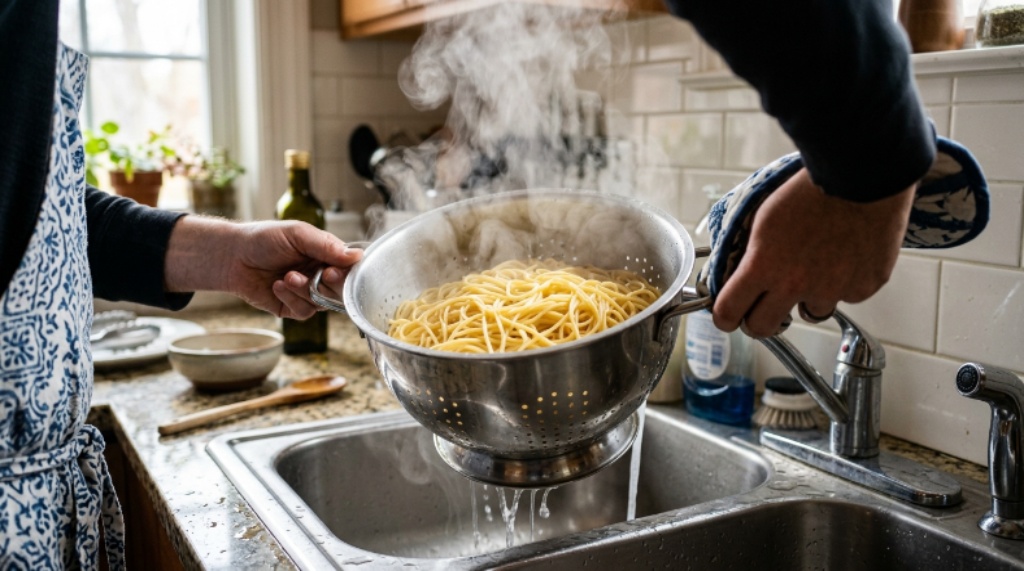
The pasta strainer, also called a colander, is one of the most used and most overlooked kitchen basics. Many beginner cooks skip it and try to drain pasta by tilting the pot lid. This approach is awkward, dangerous, and rarely works well. A proper strainer makes the process effortless and safe.
Why a Pasta Strainer Deserves a Permanent Place in Your Kitchen
Beyond draining pasta, a strainer serves a surprising number of purposes. It rinses fresh vegetables and fruit, drains canned beans and chickpeas, washes rice before cooking, and strains homemade broth. Therefore, it earns its counter space many times over.
What to Look for in a Good Colander
Choose a colander made from stainless steel or sturdy BPA-free plastic. Stainless steel is more durable and does not absorb odors or stains. Look for a model with feet or a stable base so it sits securely in the sink without tipping. Handles on both sides make it easier to carry safely from pot to sink when it is full of hot, steaming pasta.
The size of the holes matters too. Smaller perforations are better for rinsing small grains like quinoa, while larger holes work fine for pasta and vegetables. A medium-hole colander is the most versatile option for an all-purpose kitchen.
Cutting Boards: Protecting Your Knives and Your Surfaces
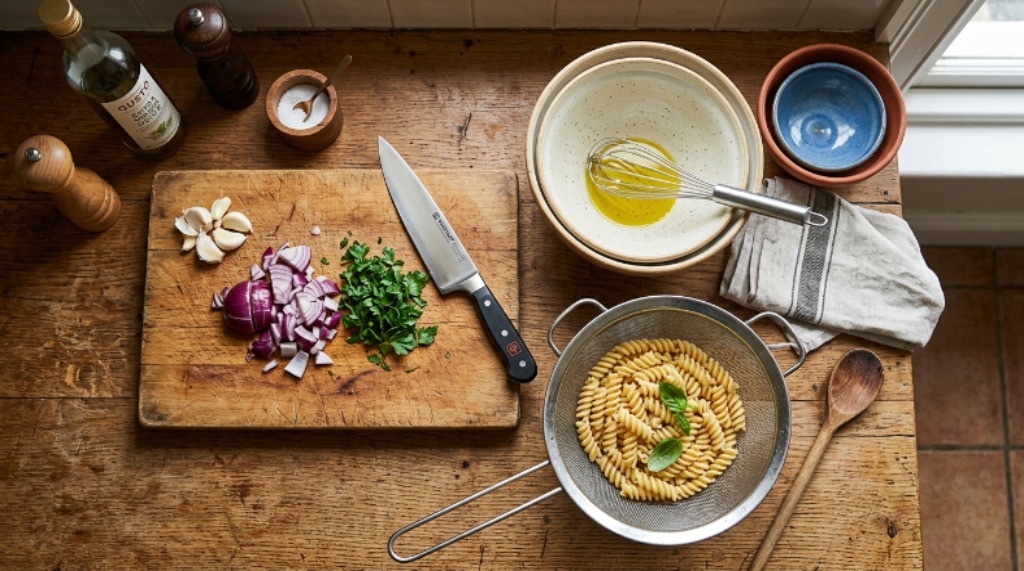
A cutting board protects both your knife edge and your countertops. Cutting directly on stone or tile dulls a blade within days and can damage surfaces permanently. Therefore, a good cutting board is a non-negotiable addition to any kitchen setup.
Wooden cutting boards are gentle on knife edges and naturally antimicrobial when maintained correctly. Plastic boards are dishwasher-safe and easier to sanitize, making them a practical choice for handling raw meat and fish. Ideally, keep one of each and use them for different tasks.
Look for a board that is large enough to work comfortably. A board that is too small forces you to work in cramped conditions, which slows you down and increases the chance of accidents. A size of at least 35 by 25 centimetres is a reasonable starting point.
Measuring Tools for Consistent Results
Good cooking is built on consistent results. Measuring tools remove the guesswork that leads to failed recipes and wasted ingredients.
A set of dry measuring cups and measuring spoons handles most baking and cooking tasks. Additionally, a liquid measuring jug with clear markings is essential for soups, sauces, and drinks. These items are inexpensive and available almost everywhere. There is no reason to skip them.
A digital kitchen scale is another worthwhile investment. It gives you precise measurements for baking and helps with portion control. Many budget-friendly scales are accurate, compact, and available for under $15.
Mixing Bowls: Versatile and Constantly Useful
A set of mixing bowls in different sizes is one of those kitchen basics that you reach for constantly without realizing it. You use them for mixing batters, tossing salads, marinating meat, storing prepped ingredients, and serving snacks.
Stainless steel bowls are lightweight, durable, and inexpensive. They nest inside one another for compact storage. A set of three sizes — small, medium, and large — covers virtually every task. Bowls with non-slip bases or rubber rims are particularly useful because they stay steady while you mix.
Spatulas, Spoons, and Tongs: The Everyday Helpers
No kitchen functions without a few basic utensils. These small tools are touched in almost every cooking session, so it is worth choosing reliable versions.
- A silicone spatula is flexible, heat-resistant, and gentle on non-stick surfaces.
- A wooden spoon is ideal for stirring soups, sauces, and curries without scratching cookware.
- A slotted spoon helps scoop food out of liquid without bringing the whole pot with it.
- A pair of tongs gives you control over meat, vegetables, and pasta in a hot pan or pot.
These items are affordable individually and often available as a bundled set. Look for heat-resistant materials and solid construction at the joint between the handle and the working end.
A Can Opener and Vegetable Peeler: Small But Essential
These two tools are easy to overlook when building a kitchen, but you will notice their absence immediately. A manual can opener is inexpensive, reliable, and lasts for years. A good vegetable peeler makes quick work of potatoes, carrots, cucumbers, and squash, saving you significant time during meal prep.
Choose a Y-peeler style if you have never used one before. Many cooks find it more comfortable and faster than the traditional straight-blade design.
Conclusion
Building a budget kitchen is about making smart choices, not cheap ones. Focus on essential cooking tools that serve multiple purposes and buy the best quality you can afford in each category. Start with a reliable chef’s knife, a practical set of pots, and a large frying pan. Add a pasta strainer early because you will use it far more often than you expect. Round out your setup with a cutting board, measuring tools, mixing bowls, and a handful of everyday utensils.
These kitchen basics form a foundation that supports everything from simple weeknight dinners to ambitious weekend cooking projects. Once you have the right tools in place, cooking at home becomes faster, easier, and far more enjoyable. You do not need a perfect kitchen to cook great food. You just need the right starting point.
Frequently Asked Questions
What is the minimum number of tools needed to start cooking at home?
At a bare minimum, you need a chef’s knife, one medium saucepan, one frying pan, a cutting board, and a pasta strainer. These five items cover the majority of everyday cooking tasks and give you a solid foundation to build from over time.
How much should I budget to set up a basic kitchen from scratch?
A functional kitchen setup can be assembled for between $100 and $200 if you shop carefully. Focus on quality in the items you use daily, such as a knife and a frying pan, and spend less on less-used items like measuring spoons and a colander.
Is stainless steel or non-stick better for a beginner cook?
Non-stick pans are more forgiving for beginners because food releases easily and cleaning is simple. However, stainless steel lasts longer and performs better at high heat. Starting with a non-stick frying pan and a stainless steel saucepan gives you the best of both.
Why is a pasta strainer considered a kitchen essential?
A pasta strainer is used far beyond just draining pasta. It rinses vegetables, drains canned goods, washes grains, and strains liquids. Its versatility makes it one of the most frequently used tools in a well-equipped budget kitchen.
Can I cook most meals with just three pots and pans?
Yes. A medium saucepan, a large stockpot, and a good frying pan cover an enormous range of recipes including soups, pasta, rice, stir-fries, sauces, and roasted vegetables. Most home cooks never need more than this basic trio for daily cooking.