
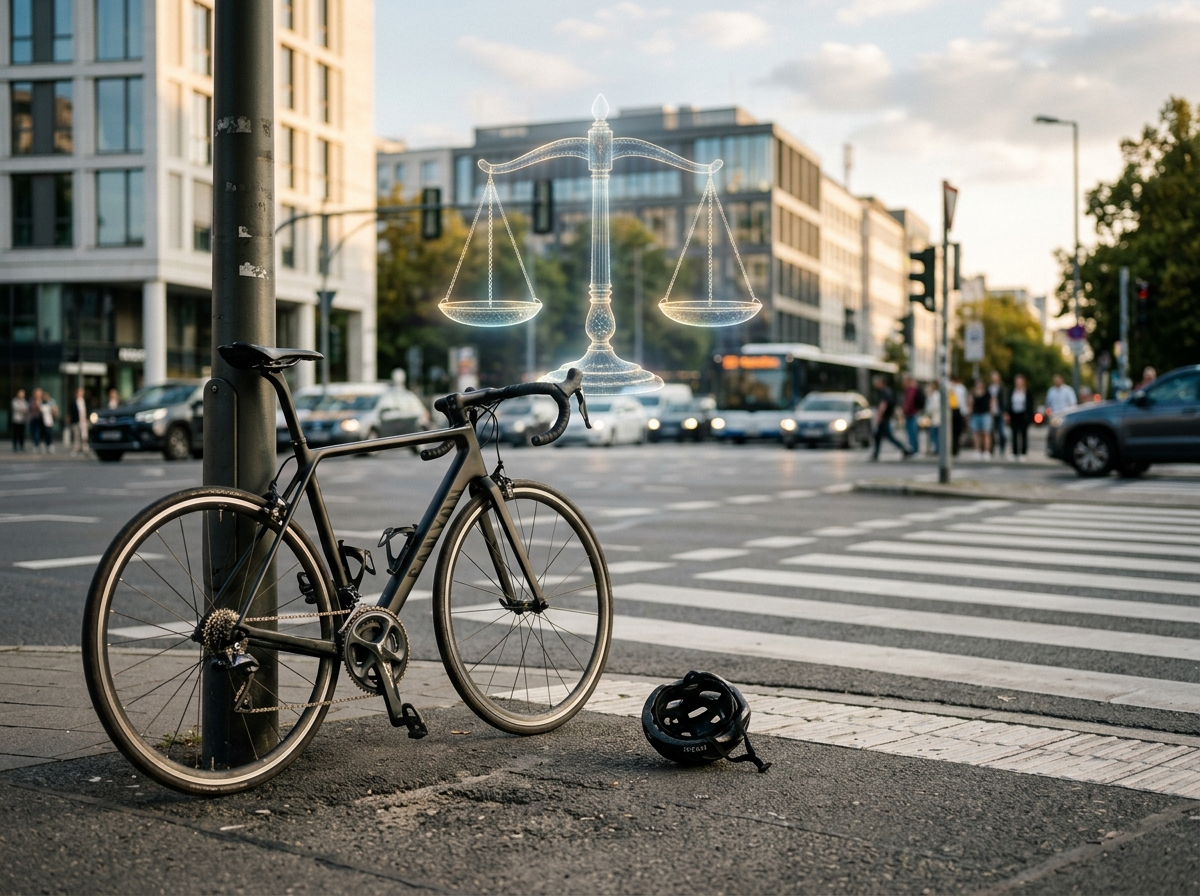
Figuring out who is legally responsible for a bicycle crash is not always as simple as pointing to the driver who hit the rider. Liability may extend to a business, property owner, manufacturer, employer, or another party depending on what caused the accident and how each person contributed to it. Because of that, bicycle accident cases often require a closer look at the full chain of events before fault and compensation can be properly assessed.
Motorist Negligence and Failure to Yield Liability
Driver negligence often forms the center of a bicycle accident claim when a motorist fails to use reasonable care around a cyclist. Common examples include running a red light, ignoring a stop sign, turning across a bike lane, following too closely, speeding, or failing to yield at an intersection. Evidence must connect the unsafe conduct to the bicycle crash and resulting injuries rather than merely showing that a traffic violation occurred.
Police reports can provide an early record, but liability often depends on additional proof. Witness accounts, traffic-camera footage, vehicle damage, phone records, skid marks, and intersection measurements may help establish where each person was before impact. Together, those details can show whether the motorist had enough time and space to recognize the cyclist and avoid the bike accident.
Premises Liability for Unsafe Roads or Property Conditions
Dangerous property conditions can sometimes create liability when they contribute directly to a cyclist losing control or entering the path of traffic. Deep potholes, broken pavement, poorly maintained driveways, hidden exits, debris, overgrown vegetation, or other hazards may create conditions that make a bicycle accident more likely.
Ownership alone does not automatically establish responsibility. Investigators may need to determine who controlled the property, who maintained the area, how long the hazard existed, and whether the responsible party knew or should have known about it. Photographs, maintenance records, complaints, inspection reports, and witness statements can become important in bicycle accident claims involving unsafe property or roadway conditions.
Product Liability for Defective Bicycle Parts or Equipment
Mechanical failure can shift attention away from a motorist and toward the company responsible for a bicycle or component. A fractured fork, faulty brake, failed wheel, defective helmet, or weakened frame may contribute to a bicycle crash if the part was improperly designed, manufactured, or sold with inadequate warnings.
Engineering analysis can help separate collision damage from a defect that existed before impact. Metallurgical testing, maintenance history, purchase records, recall information, and inspection of the damaged part may reveal fatigue, material weakness, or manufacturing problems. Preserving the bicycle in its damaged condition is especially valuable because repairs or disposal can destroy evidence needed in product-related bicycle accident cases.
Vicarious Liability for Commercial or Delivery Drivers
Businesses may face legal responsibility when an employee causes a bike accident while performing duties connected to the job. Delivery drivers, contractors, service technicians, and other workers often operate vehicles during business hours, creating questions about whether the employer can be held responsible for the employee’s conduct.
Company records can show whether the driver was working, following an assigned route, making a delivery, or carrying out another authorized task at the time. Dispatch logs, GPS information, time records, training documents, and employment files may uncover facts that an ordinary insurance investigation misses. Separate legal issues may also arise if an employer ignored known driving problems, provided inadequate training, or allowed an unsafe worker to continue operating company vehicles.
Shared Fault Under Alabama Contributory Negligence Rules
Alabama’s contributory negligence rule can make allegations of cyclist fault especially important in bicycle accident claims. Under that doctrine, a defendant may argue that the injured rider’s own negligence contributed to the collision, potentially affecting the ability to recover damages. Insurers may therefore examine lighting, signaling, lane position, traffic-control compliance, speed, and other rider conduct closely.
Accusations of shared fault should still be tested against the actual evidence. Video, roadway measurements, witness testimony, photographs, and reconstruction analysis can help determine whether the cyclist’s actions truly contributed to the bicycle crash or whether the defense is attempting to shift responsibility without adequate support. Careful investigation matters because a seemingly small factual dispute can become a major legal issue in Alabama bicycle accident cases.
Liability for Doorings, Unsafe Passing, and Turning Collisions
Dooring accidents occur when a driver or passenger opens a vehicle door into the path of an approaching cyclist. Unsafe passing can involve a motorist moving too close to a bicycle, while turning collisions frequently happen when a driver crosses a cyclist’s path at an intersection or driveway. Each scenario may involve different traffic rules, sight lines, vehicle movements, and evidence.
Physical damage can reveal where contact occurred, while surveillance footage may show whether the cyclist had enough time to react. Statements from occupants, nearby drivers, pedestrians, and business employees can also clarify whether a door opened suddenly or a vehicle turned without yielding. The Lackey Law Firm can investigate these and other forms of bicycle accident liability, preserve available evidence, examine insurance coverage, address contributory negligence arguments, and identify every party whose conduct may have contributed to the crash. Their attorneys can use those findings to build bicycle accident claims around the legal theories and damages supported by the facts.


