
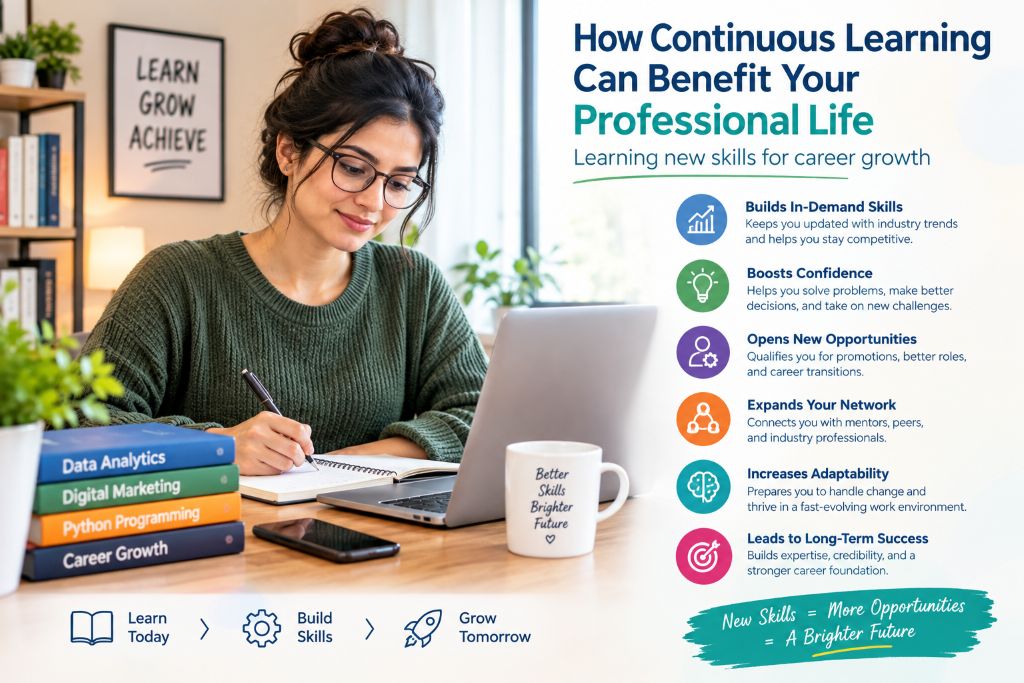
Key Takeaways
- Continuous learning keeps your skills current as jobs change.
- New skills can lead to promotions, better pay, and new roles.
- Learning builds confidence, creativity, and problem-solving ability.
- Small daily habits work better than occasional long study sessions.
- Free and low-cost options make learning easy to start.
Work changes fast. New tools appear, and old methods fade. However, professionals who keep learning stay ahead of these shifts. Continuous learning means building new skills throughout your career. It does not require a degree or a big budget. According to the World Economic Forum’s Future of Jobs Report 2025, employers expect 39 percent of key job skills to change by 2030. Therefore, learning is no longer optional. This article explains how continuous learning can benefit your professional life. It also shows you how to start today.
Stay Relevant in a Changing Job Market
Job requirements shift every year. Technology, automation, and new business models drive most of these changes. As a result, skills that were valuable five years ago may lose value today.
The World Economic Forum’s 2025 report shows the scale of this change. Employers in the survey expect that 59 in 100 workers will need training by 2030. Clearly, learning is now a normal part of work.
Continuous learning protects you in three ways:
- Job security: Updated skills make you harder to replace.
- Flexibility: You can move into new roles when your current one changes.
- Confidence: You feel ready when new tools arrive at work.
Additionally, learning helps you spot trends early. For example, a marketer who studies data analysis can adapt when reports become more important. Similarly, a teacher who learns digital tools can run online classes with ease.
However, you do not need to learn everything. Focus on skills linked to your field. Read job listings for roles you want next. Then note which skills appear again and again. Those skills show where your market is heading.
Finally, remember that people skills matter too. The same report lists analytical thinking, resilience, and flexibility among the top skills for growth. Therefore, balance technical study with communication and teamwork.
Grow Your Career and Earning Power
Learning does more than protect your job. It also opens doors. Employers notice people who improve themselves. Consequently, these workers often get the first chance at new projects and promotions.
Companies also value growth. LinkedIn’s 2018 Workplace Learning Report found that 94 percent of employees would stay longer at a company that invests in their careers. Therefore, employers have strong reasons to support your learning. You can use this to your advantage.
Here is how new skills can raise your career value:
- Promotions: Leaders often choose people who show initiative and fresh knowledge.
- Higher pay: Rare and in-demand skills give you stronger ground in salary talks.
- New roles: A new certificate or course can help you switch fields.
- Wider networks: Classes and workshops connect you with helpful peers.
In addition, learning gives you proof of effort. A completed course or new certificate looks strong on a résumé. Likewise, it gives you real stories to share in interviews.
Moreover, do not wait for your manager to act. Ask about training budgets and mentoring programs. Many companies pay for courses but few people ask. A short, clear request that links the course to your work goals often succeeds.

Build Confidence, Creativity, and Problem-Solving Skills
Learning changes how you think. Each new skill trains your mind to handle fresh problems. As a result, you become more flexible and calm under pressure.
Confidence grows in a simple way. When you learn something hard, you prove to yourself that you can improve. Then you approach the next challenge with less fear. This habit builds a strong, growth-minded attitude.
Continuous learning also fuels creativity. When you study different topics, you connect ideas from separate fields. For instance, a designer who learns basic psychology can create more useful products. Likewise, an engineer who studies writing can explain ideas more clearly.
Additionally, learning improves your problem-solving. You gain more tools and methods to choose from. Therefore, you rarely feel stuck when something unexpected happens.
Consider these everyday benefits:
- Better decisions: Wider knowledge helps you judge options with care.
- Stronger communication: New vocabulary and ideas help you explain your thoughts.
- Greater resilience: You handle change with less stress.
- More job satisfaction: Growth keeps work interesting and meaningful.
Furthermore, learning can boost your energy at work. Routine tasks may feel dull after a few years. However, fresh goals bring back curiosity. Consequently, many professionals feel more engaged and less burned out.
Practical Ways to Start Learning Today
Starting is often the hardest part. However, you can begin with small steps. You do not need hours of free time. Even 15 minutes a day adds up over a year.
First, set one clear goal. For example, you might want to learn spreadsheet skills or public speaking. A single goal keeps you focused and prevents overload.
Next, choose a learning method that fits your life. Try these options:
- Online courses: Platforms such as Coursera, edX, and Khan Academy offer many free lessons.
- Books and articles: Read one industry book each month.
- Podcasts and videos: Learn during your commute or a walk.
- Mentors: Ask an experienced colleague to guide you.
- On-the-job projects: Volunteer for tasks that stretch your skills.
Additionally, schedule your learning time. Treat it like a meeting you cannot skip. A regular slot, such as early morning, builds a strong habit.
Then, apply what you learn quickly. Use a new skill in a real task within a week. Practice makes knowledge stick. Moreover, teaching others helps you remember more. Share a short summary with your team.
Finally, track your progress. Keep a simple list of skills you have gained. Review it every three months. Seeing your growth keeps you motivated.
Conclusion
Continuous learning is one of the smartest investments in your career. It keeps your skills current, opens new job paths, and builds lasting confidence. This is especially important when considering what skills you need to get better construction jobs, as employers often value workers who continue developing their abilities. Moreover, learning new skills helps you handle change with a calm and creative mind. Jobs are changing quickly, and workers who keep learning will be better prepared to adapt.
Start small and stay steady. Choose one skill, set aside 15 minutes each day, and begin this week. Then share your learning goal in the comments below. Subscribe to our newsletter for more practical career tips.
Frequently Asked Questions
What is continuous learning?
Continuous learning is the habit of building new skills and knowledge throughout your career. It includes courses, reading, mentoring, and hands-on practice.
How much time should I spend learning each week?
Aim for at least two to three hours a week. Short daily sessions of 15 to 30 minutes often work better than one long session.
Can continuous learning help me get a promotion?
Yes. New skills show initiative and make you more valuable. Managers often choose people who grow and take on bigger challenges.
Do I need to pay for courses?
No. Many free options exist, including public library resources, free online lessons, podcasts, and company training programs.
Which skills should I learn first?
Start with skills that match your current role or your next goal. Also build communication, problem-solving, and basic digital skills, because they help in almost every job.