
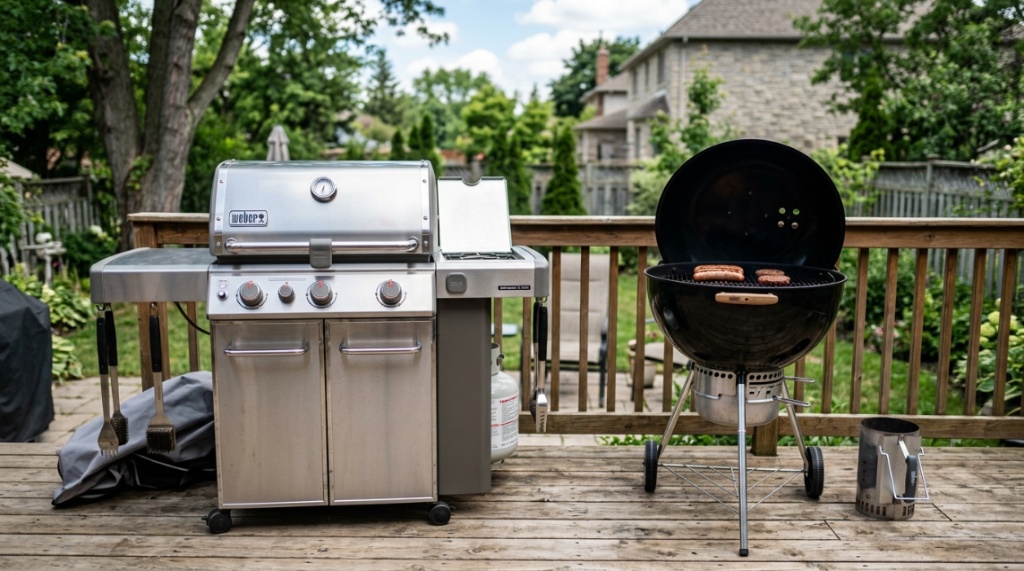
You finally have the perfect patio set or a stretch of open backyard, but without a reliable grill, that outdoor space is just a seating area. Standing in a store aisle or scrolling through dozens of online listings, it is easy to feel paralyzed by choices. You want a BBQ grill patio backyard setup that delivers smoky flavor, fits your space, and doesn’t blow your budget. This guide cuts through the marketing noise and helps you match a grill to how you actually cook, how much time you have, and where you live.
What Should You Consider First When Buying a BBQ Grill?
Start with your cooking style and available space, not the brand. If you cook for two people on weekends, you need a different grill than someone hosting weekly block parties. Measure your patio or deck area before shopping. Also factor in local regulations—many apartments and HOAs restrict gas or charcoal grills on balconies. Once you know your space limits and how many people you typically feed, the rest of the decision gets much simpler.
Assessing Your Outdoor Setup
Think about wind exposure, proximity to your kitchen door, and surface material. A grill placed too close to wooden decking or dry vegetation is a fire hazard. Concrete, brick, or stone patios are ideal. Also consider storage: if you live in a rainy climate, a grill with a built-in cover or a cart that rolls into a shed matters more than high BTU output.
Which Type of Fuel Is Best for a Backyard BBQ Grill?
Gas grills offer convenience, charcoal grills provide smoky flavor, and pellet grills deliver set-and-forget smoking. There is no single “best” fuel—it depends on your patience and taste preferences. Gas fires up in minutes and cleans easily, charcoal requires 20–30 minutes of prep but produces authentic wood-fired taste, and pellet grills excel at low-and-slow cooking. Choose gas if you grill weekly for quick meals; choose charcoal if flavor is your top priority; choose pellets if you love smoking brisket on weekends.
Propane vs. Natural Gas for Patio Grills
Propane tanks are portable and widely available, but you have to refill them. Natural gas connects directly to your home line, so you never run out mid-cookout. Natural gas burns slightly cooler than propane, but the difference is negligible for most home cooks. If you already have a gas line on your deck, natural gas is the more convenient long-term choice.
Charcoal Grills and Flavor Profiles
Lump charcoal burns hotter and cleaner than briquettes, while briquettes burn longer and more consistently. For backyard barbecues, briquettes are easier to manage for beginners. If you want that authentic smoky crust on steaks, lump charcoal combined with wood chunks is the way to go.
How Much Cooking Space Do You Really Need on a Patio Grill?
A good rule of thumb is 70–90 square inches of primary cooking area per person you regularly serve. For a family of four, a grill with 350–450 square inches is sufficient. If you entertain frequently, look for 500–700 square inches. Remember that warming racks and secondary grates add capacity but don’t count toward the main searing area. A common mistake is buying too large a grill for a small patio, which wastes fuel and makes temperature control harder.
| Number of People | Recommended Cooking Area | Typical Grill Size |
|---|---|---|
| 2–3 | 250–350 sq in | Small portable or compact cart |
| 4–6 | 350–500 sq in | Standard 3-burner gas or 22-inch kettle |
| 6–8 | 500–700 sq in | 4-burner gas or large charcoal |
| 8+ | 700+ sq in | 6-burner gas or dual-fuel system |
Why Does Grill Build Quality Matter More Than Brand Name?
Brand loyalty often leads people to overpay for mediocre construction. A grill made of thick stainless steel (at least 19-gauge) or cast aluminum will outlast a cheaper model with thin painted steel, regardless of the name on the lid. Check the firebox material: porcelain-coated steel resists rust better than bare steel, and cast iron grates retain heat for better searing but require more maintenance. Open the lid and shake the grill—if it wobbles or rattles, the construction is questionable.
Key Components to Inspect Before Buying
- Grates: Cast iron grates provide superior heat retention and sear marks but need seasoning. Stainless steel grates are easier to clean and rust-resistant.
- Firebox: Look for heavy-gauge steel or aluminum. Thicker metal holds steady temperatures better.
- Ignition system: Electronic ignitions are reliable; push-button piezo igniters can fail after a few seasons.
- Wheels: At least two locking wheels on a cart grill make moving and securing the grill much easier.
Can a Small Patio Accommodate a Full-Size BBQ Grill?
Yes, but you must focus on vertical storage and foldable side shelves. Compact gas grills with two burners can fit on a 36-inch-wide balcony space while still cooking for four people. Wall-mounted grills are an excellent option for tiny patios because they free up floor space. If you have severe space constraints, a tabletop charcoal grill or a portable propane model might be your best solution. Always leave at least 24 inches of clearance on all sides for safety.
Measuring Your Patio for a Grill
Use painter’s tape to mark the footprint of the grill you are considering on your actual patio floor. Include the swing radius of the lid. This visual test reveals whether the grill will feel cramped when open. Many online specs list the lid-closed dimensions, which can be misleading.
How Do BTU Ratings Affect Backyard Grilling Performance?
BTU (British Thermal Unit) measures heat output, not cooking performance. A grill with 60,000 BTU can still cook poorly if the heat escapes through thin metal or poor seals. Focus on heat retention and even distribution rather than chasing high BTUs. For a typical backyard BBQ grill patio backyard setup, 80–100 BTU per square inch of cooking area is a solid benchmark. Anything above that is usually marketing hype unless you grill in freezing temperatures or high wind.
What Features Actually Matter for Patio BBQ Grills?
The most useful features are a built-in lid thermometer, a reliable ignition system, and side burners for sauces or sides. Rotisserie kits are nice if you enjoy roasting whole chickens or prime rib. Avoid grills with complex digital panels that can fail in rain or direct sunlight. Simple, mechanical controls are more durable outdoors. A side shelf for prep space is nearly essential if your patio lacks counter space.
Features Worth the Extra Cost
- Porcelain-coated cast iron grates
- Double-walled lid for heat retention
- Grease management system with a removable tray
- Integrated lighting for nighttime grilling
- Side burner (if you cook side dishes simultaneously)
Features to Skip
- Built-in Bluetooth thermometers (phone apps drain battery and connectivity drops)
- Infrared searing burners (good but rarely used by casual grillers)
- LED control knobs (more to break in weather)
When Is the Best Season to Buy a Backyard Grill?
Late summer (August to September) and early fall (October to November) offer the deepest discounts. Retailers clear out inventory to make room for holiday items. You can find last year’s models at 30–50% off. Spring (March to May) has the widest selection, but prices are highest because demand peaks. If you can wait until after Labor Day, you will save significantly on a quality grill for the following year.
How Do You Match a Grill to Your Climate?
Coastal areas with salty air demand stainless steel construction or aluminum grills to resist corrosion. High-altitude locations (above 5,000 feet) require grills with higher BTU output because lower air pressure reduces flame temperature. In humid climates, look for porcelain or stainless components that won’t rust quickly. Wind-prone regions benefit from grills with a full lid and lower side walls to shield the flame. If you grill year-round in a cold climate, consider a grill with a heavy ceramic or double-walled lid for better heat retention.
How Much Should You Spend on a BBQ Grill for a Patio?
You can find a functional gas grill for $200, but a durable model that lasts 5–8 years starts around $400–$600. Charcoal grills are cheaper—quality kettles start at $150. Premium grills over $1,000 typically offer thicker steel, better warranties, and extra features like rotisserie burners. Your sweet spot for a reliable backyard setup is $400–$700 for gas or $200–$400 for charcoal. Spending more than $1,500 is usually unnecessary unless you grill multiple times per week in harsh weather.
Should You Choose a Portable or Stationary Patio Grill?
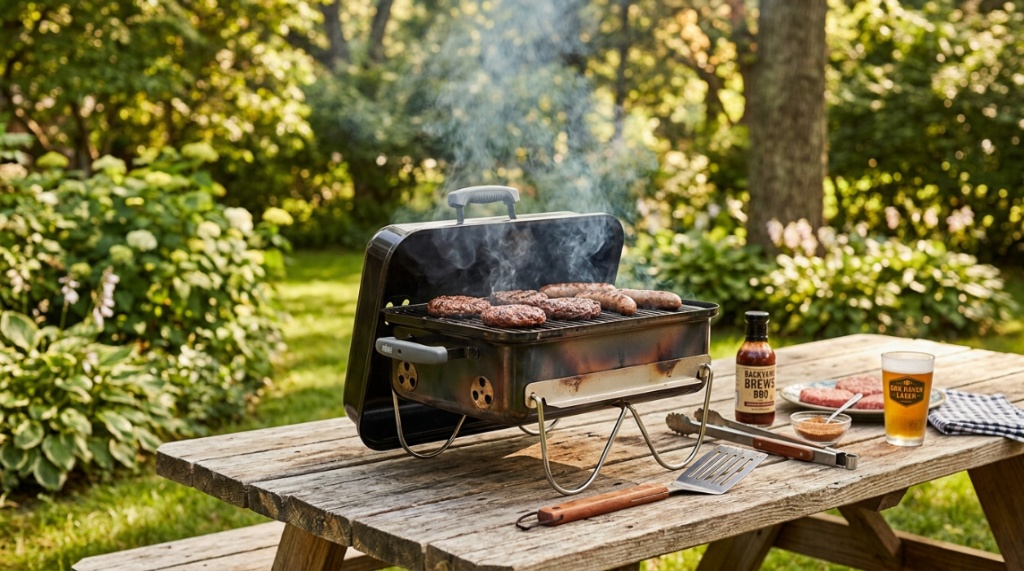
Portable grills suit renters, campers, and homeowners with limited patio space. Stationary grills (built-in islands or large cart models) offer more cooking area and better heat retention. If you never plan to move your grill, invest in a stationary model with a sturdy base. If you might relocate within a few years or want to grill at the park, a portable model is more practical. Portable propane grills typically have 150–250 square inches of cooking area, enough for 2–4 people.
While a massive freestanding setup is perfect for large decks, it isn’t your only option. If you have limited space or love camping trips, you can pick portable outdoor grills for backyard and travel to get the best of both worlds without sacrificing flavor.
How Do You Test a Grill Before Buying?
Visit a showroom if possible. Open and close the lid several times to check hinge quality. Turn the burners on and off to feel the knob tension. Lift the cooking grates to see if they feel substantial. Check that the igniter sparks consistently. Look underneath at the grease tray—it should slide out easily for cleaning. If the grill has a warming rack, test that it doesn’t collapse under light pressure. These tactile checks reveal build quality that online photos cannot.
Frequently Asked Questions
Is a gas grill better than charcoal for a small patio?
Yes, gas grills are better for small patios because they heat up faster, produce less smoke, and have fewer fire risks. Charcoal grills need more clearance and produce ash that can drift onto neighbors.
How often should you replace a backyard BBQ grill?
Most gas grills last 5–10 years with proper maintenance. Charcoal grills can last decades if kept dry and covered. Replace a grill when the firebox develops rust holes or the burner tubes corrode beyond repair.
Can you use a charcoal grill on a wooden deck?
It is not recommended. Charcoal embers can fall through gaps in deck boards and start fires. If you must use charcoal on a deck, place a fireproof mat under the grill and keep a fire extinguisher nearby.
Do pellet grills work well for backyard cooking?
Yes, pellet grills are excellent for smoking and roasting but less ideal for high-heat searing. They require electricity to operate the auger, so they won’t work during a power outage. They are a great choice if you smoke meats regularly.
What is the easiest grill to clean for a patio?
Gas grills with porcelain-coated grates and a removable grease tray are the easiest to clean. Avoid grills with intricate burners that cannot be accessed easily. Self-cleaning cycles are rare on home grills, so manual cleaning is still necessary.
How much space do you need around a grill?
At least 24 inches of clearance on all sides from combustible materials. Never place a grill under a wooden roof, overhang, or low tree branches. Keep the grill at least 10 feet away from your house siding and windows.
Should you buy a grill with a side burner?
A side burner is useful if you cook sauces or sides while grilling, but it consumes counter space. If you have a small patio, skip the side burner and use your kitchen cooktop instead. Many grill owners rarely use their side burner.
Conclusion
Choosing the right BBQ grill for your patio or backyard comes down to honestly assessing how you cook, where you place the grill, and how much maintenance you are willing to handle. Gas grills win on convenience, charcoal wins on flavor, and pellet grills win on versatility. Focus on build quality over brand names, match cooking areas to your guest count, and never ignore safety clearances. Start with a budget of $400–$700 for a gas grill that will last, and buy during late summer for the best deals. Your perfect backyard setup is out there, and now you have the practical knowledge to find it.


