

You dust the furniture on Saturday, and by Tuesday the coffee table is coated again. Everyone in the house wakes up congested, but nobody has a cold. The windows stay closed because it’s either too hot or too cold outside, and somewhere in the back of your mind you wonder whether the air inside your home is actually working against you. Indoor air quality problems rarely announce themselves loudly. They show up as patterns — recurring dust, lingering odors, mystery headaches, condensation on the glass — that are easy to blame on something else. If you’ve been noticing these patterns and want to know which ones actually matter, this guide walks through the real warning signs, what typically causes them, and a practical filter-sizing resource you can learn more here before you start troubleshooting your HVAC system.
Quick Answer
The most reliable signs of poor indoor air quality are recurring dust buildup, musty or stale odors that return quickly, chronic congestion or morning headaches, visible condensation on windows, and excessive static or allergy symptoms that improve when you leave home. No single sign proves a problem, but two or more appearing together usually point to a real issue — most often inadequate ventilation, a dirty or wrong-sized filter, excess humidity, or a hidden moisture source. Confirming the cause matters more than guessing, because the fix for a ventilation problem is different from the fix for a filtration or humidity problem.
Key Takeaways
- Persistent dust, odors, and health symptoms that fade when you’re away from home are the strongest indicators of an indoor air problem.
- A filter that is clogged, the wrong size, or too restrictive for your system can quietly reduce both air quality and HVAC efficiency.
- High indoor humidity encourages mold and dust mites, while overly dry air irritates airways — both can feel like “bad air” without a clear smell.
- Fixing the source (ventilation, moisture, filtration) matters more than masking symptoms with air fresheners or standalone purifiers.
- Some signs, like backdrafting or fuel-burning appliance issues, are safety concerns that require professional attention, not DIY fixes.
To protect your health and boost efficiency, make sure to improve indoor air quality with regular hvac maintenance
Health and Comfort Signs You Shouldn’t Ignore
 Your body often registers air quality problems before your eyes do. The key pattern to watch for is timing: symptoms that are worse at home and better when you’ve been away for a day or two. Common indicators include:
- Waking up with a stuffy nose, sore throat, or headache that eases after you leave the house
- Congestion, sneezing, or itchy eyes that flare up in specific rooms rather than everywhere
- Dry, irritated skin and eyes during heating season
- Fatigue or mild dizziness that improves with fresh air
- Asthma or allergy symptoms that seem to intensify indoors
These symptoms aren’t proof on their own. Seasonal allergies, colds, and stress can produce similar effects. But when they follow a location pattern — worse in the bedroom, better at the office — the indoor environment deserves a closer look. If anyone in the home experiences symptoms that suggest carbon monoxide exposure, such as dizziness, nausea, or confusion, treat it as an emergency and get fresh air and medical help immediately.
Visible and Smellable Clues Around the House
Some air quality problems leave physical evidence. These clues are easier to verify than symptoms because you can see or smell them directly.
Odors That Return Quickly
A musty smell in the basement, a stale odor in a closed bedroom, or cooking smells that linger for hours all point to weak ventilation or trapped moisture. If you clean an area and the smell comes back within days, the source is likely ongoing rather than a one-time spill.
Dust and Particulate Buildup
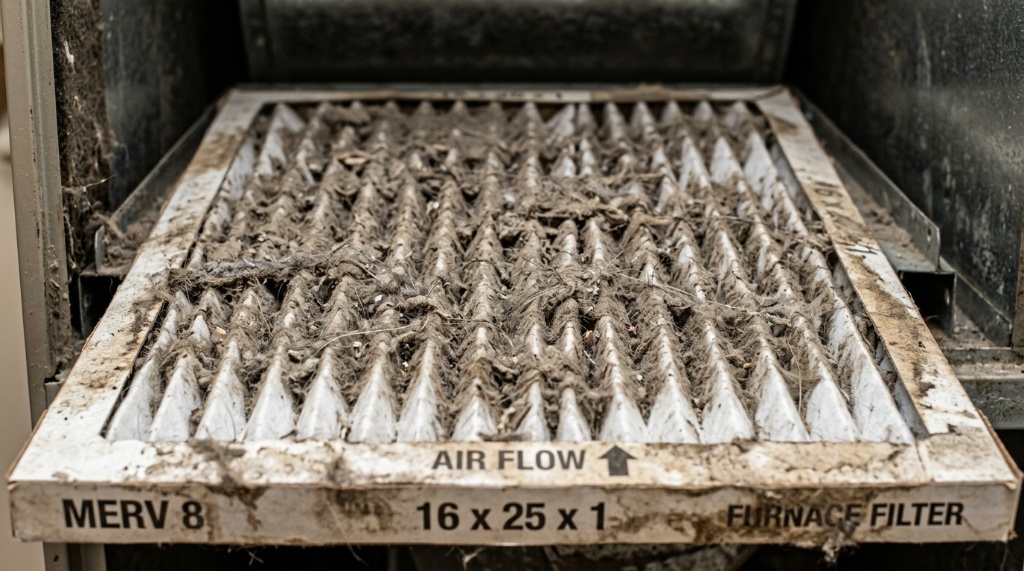
Some dust is normal. Dust that reappears on surfaces within a day or two, dark streaks around vents, or visible particles floating in sunlight suggest your filtration isn’t keeping up. This is often a filter problem — the wrong size, a clogged filter, or a filter that doesn’t match your system’s airflow needs.
Condensation and Moisture
Foggy windows, damp spots on walls or ceilings, peeling paint, and visible mold are strong signals of excess humidity. Indoor humidity that stays above roughly 50–60% creates a favorable environment for mold, dust mites, and mildew, all of which affect air quality.
Household Habits That Quietly Worsen Air Quality
Sometimes the cause isn’t a broken system — it’s how the home is used. These habits are easy to overlook because they feel normal.
- Sealing the house tight for efficiency. Modern weatherization reduces energy costs but also reduces fresh air exchange, allowing pollutants to concentrate.
- Skipping filter changes. Many homeowners change filters once a year or never. Most standard filters need attention far more often, especially with pets or heavy dust.
- Using the wrong filter. A filter that’s too restrictive can strain airflow and, over time, reduce system performance rather than improve air quality.
- Ignoring exhaust fans. Bathroom and kitchen fans that aren’t run long enough leave moisture and cooking byproducts indoors.
- Relying on air fresheners. These mask odors without removing the particles or gases causing them, and some add their own VOCs.
If you’re trying to sort out filter sizing and compatibility before anything else, confirming the correct dimensions for your unit is a reasonable first step, and a properly matched replacement like a 20x20x1 option is often where homeowners start troubleshooting.
How to Narrow Down the Likely Cause
Rather than attacking everything at once, work through the most common causes in order of likelihood and cost.
- Check your filter first. Look at its condition and its size. A visibly gray, clogged filter, or one that doesn’t seat properly in the slot, is a common and cheap fix.
- Measure indoor humidity. An inexpensive hygrometer tells you whether you’re in the comfortable 30–50% range or above it.
- Inspect for moisture. Check under sinks, around windows, in basements, and near the HVAC system for dampness, discoloration, or mold.
- Assess ventilation. Do exhaust fans actually move air? Does the house feel stuffy after cooking or showering?
- Consider recent changes. New carpet, paint, furniture, or a remodel can introduce off-gassing that lingers for weeks.
- Rule out safety issues. If you have gas appliances, a fireplace, or an attached garage, and you notice persistent headaches or unusual odors, have combustion appliances and ventilation checked by a professional.
What Actually Helps — and What Doesn’t
Improving indoor air quality usually means addressing the source, not just the symptom. Filtration and purification help, but they can’t compensate for a moisture or ventilation problem. Effective steps typically include:
- Replacing filters on schedule with the correct size and a rating appropriate for your system’s airflow
- Running kitchen and bathroom exhaust fans during and after use
- Keeping indoor humidity in a reasonable range with ventilation, dehumidifiers, or humidifiers as needed
- Fixing leaks and drying damp areas promptly
- Opening windows periodically when outdoor conditions allow
- Using a properly sized air purifier as a supplement, not a substitute
What tends to disappoint: scented candles, plug-in fresheners, and ozone-generating “purifiers.” They either hide the problem or, in the case of ozone, introduce a new irritant. A standalone purifier in one room also won’t fix a whole-house ventilation or moisture issue.
When to Call a Professional
Some signs are beyond DIY scope. Contact a qualified HVAC or indoor air quality professional if you notice any of the following:
- Visible mold covering more than a small area, or mold that returns after cleaning
- Persistent musty odors with no identifiable source
- Headaches, nausea, or dizziness that occur mainly at home
- Symptoms that affect multiple household members at once
- Suspected backdrafting, gas odors, or carbon monoxide concerns
- An HVAC system that runs constantly, cycles oddly, or can’t maintain comfort
These situations can involve combustion safety, structural moisture, or system design — areas where an inspection is faster and safer than trial and error.
Frequently Asked Questions
How can I test indoor air quality at home?
You can start with inexpensive tools: a hygrometer for humidity, a carbon monoxide alarm, and careful observation of dust, odors, and symptoms. For more detailed testing — VOCs, mold spores, or particulate levels — professional testing is more reliable than consumer kits, which vary widely in accuracy.
Does a dirty air filter really affect air quality?
Yes. A clogged filter can’t capture new particles effectively and restricts airflow, which stresses the system. It also allows dust to recirculate. Replacing it on schedule is one of the simplest improvements you can make.
Why does my house feel stuffy even with the AC running?
Cooling and ventilation are different functions. Air conditioning recirculates and cools indoor air, but a tightly sealed home may still lack fresh air exchange. Exhaust fans, occasional window opening, and proper filter maintenance usually help.
Can poor indoor air quality cause headaches?
It can contribute. Headaches are often linked to carbon monoxide, high CO2 levels from poor ventilation, strong chemical odors, or mold exposure. If headaches happen mainly at home and improve when you leave, that pattern is worth investigating.
Is high humidity always a sign of an air quality problem?
Not always, but consistently high humidity — roughly above 50–60% — supports mold, dust mites, and mildew. If you also see condensation or musty odors, humidity is likely part of the problem.
Do air purifiers fix poor indoor air quality?
They help with particles, some allergens, and certain odors in the room where they operate. They don’t address ventilation, excess moisture, or combustion gases. Think of them as a supplement to source control, not a complete solution.
Conclusion
Poor indoor air quality rarely shows up as one dramatic sign. It shows up as a pattern — recurring dust, odors that won’t leave, symptoms that ease when you’re away, or moisture you keep wiping up. Start with the simplest and most common culprit: your filter. Confirm it’s the right size, check its condition, and replace it on schedule. From there, address humidity and ventilation before spending money on purifiers. If the signs point to mold, moisture damage, or combustion appliances, bring in a professional rather than experimenting. Small, consistent fixes usually outperform one big purchase.


