Sudden changes in the way a garage door moves often point to more than normal wear. Springs carry much of the door’s weight, so a weakened or broken component can quickly affect cables, rollers, tracks, and the opener. Recognizing the warning signs early helps homeowners avoid operating a door that may become harder to control or unsafe to use.
A Visible Gap in a Torsion Spring Means It Has Broken
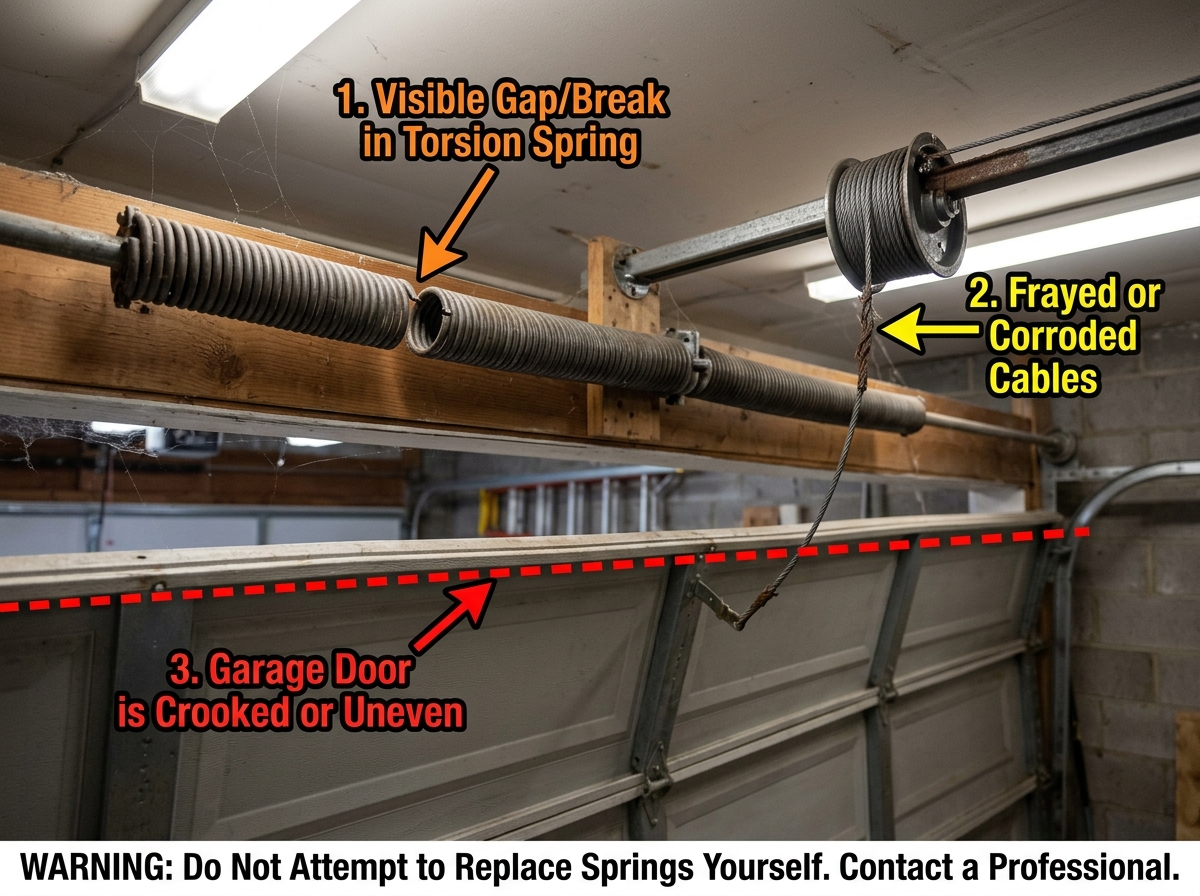
Torsion springs usually form one continuous coil above the garage door, so a noticeable gap in the coil is a strong sign that the spring has snapped. Broken sections can no longer provide the torque needed to counterbalance the door’s weight, leaving the opener or homeowner to handle far more load than intended. Continuing to operate the system in this condition can strain the motor and place additional stress on cables, drums, and other lifting hardware.
Why Does the Garage Door Suddenly Feel Much Heavier?
Weight becomes far more noticeable once a spring loses tension because the lifting system no longer offsets the mass of the door. Homeowners may discover that the door is difficult to raise manually or drops quickly after being lifted a short distance. Automatic openers may also move slowly, stop midway, or refuse to open the door at all.
Resistance should never be solved by repeatedly pressing the wall button or remote. Motors used during garage door opener installation are designed to guide a balanced door rather than lift its full weight without spring assistance. A search for a garage door repairman near me makes sense as soon as the door suddenly becomes heavy, especially if other symptoms such as popping noises or uneven movement appear.
Crooked Movement Can Point to Uneven Spring or Cable Tension
One side of a garage door rising faster than the other usually indicates that the lifting system is no longer distributing force evenly. Unequal tension can make rollers bind against the tracks, pull cables out of position, or twist sections as the door moves. Prompt inspection helps determine whether replacing garage door spring components, repairing a cable, or correcting another balance issue is required.
Loud Bangs From the Garage Should Never Be Ignored
Snapping torsion springs can release stored energy with a sound that resembles a heavy object hitting the floor. Residents sometimes hear the bang without seeing anything fall, only to discover later that the garage door will not open normally. That noise deserves attention even if the door still appears closed and secure.
Extension springs can create different hazards because stretched components may move abruptly when they break. Safety cables are intended to limit uncontrolled movement, but damaged or missing restraints leave fewer safeguards in place. An overhead door company near me can inspect the spring type, cables, brackets, and related hardware before anyone attempts to operate the door again.
The Door Opens a Few Inches and Stops
Partial opening is a common clue that the opener is trying to move a door that has lost proper spring assistance. Electronic controls may stop the motor because resistance exceeds normal operating limits, preventing further travel. Forcing another cycle can damage opener gears, rails, belts, or other internal parts without solving the underlying spring problem.
Repeated Jerking and Shaking Signal Poor Door Balance
Smooth travel depends on balanced spring tension working with rollers, tracks, drums, and cables. Jerking motion suggests that the door is fighting uneven forces somewhere in that system rather than following a controlled path. Spring fatigue can develop gradually, which means the problem may appear as mild vibration before turning into obvious shaking.
Older doors deserve closer attention because previous repairs, insulation changes, added windows, or replacement panels may have altered the door’s weight. Garage door installation professionals account for those differences when specifying springs because even visually similar doors can require different lifting capacities. Proper spring selection matters just as much during repairs, particularly after the original door has been modified.
A Door That Slams Down Needs Immediate Attention
Fast downward movement indicates that the spring system may no longer be controlling the door’s weight correctly. Falling panels can damage vehicles, stored items, flooring, and anything else in the opening, while a person attempting to catch the door could be seriously injured. Service should be arranged before the door is operated again, since the opener is not meant to act as the primary support for a failed spring.
Frequent Opener Problems May Actually Start With the Springs
Struggling motors do not always mean the opener itself needs replacement. Weak springs can make a healthy unit sound louder, run longer, reverse unexpectedly, or fail to lift the door because the mechanical load has changed. Diagnosis should therefore include a manual balance test and inspection of the entire lifting assembly before recommending another garage door opener installation.
Technicians can also check whether cables are frayed, drums are aligned, bearings turn freely, and spring specifications still match the door. Replacing garage door spring parts professionally helps restore the counterbalance system rather than asking the opener to compensate for worn hardware. Snappy Doors provides professional garage door spring replacement along with garage door installation, opener service, and related repairs, helping homeowners address warning signs before a weakened spring causes additional damage or unsafe door movement.