
Tile floors are beautiful, durable, and easy to maintain — but only when you use the right tools. With so many products on the market today, choosing the correct equipment can feel overwhelming. However, making a smart choice is simpler than you think once you understand what your floor actually needs.
This guide walks you through everything you need to know. From daily maintenance to deep cleaning, you will find clear, practical advice to keep your tile looking its best all year long.
Why the Right Cleaning Tool Matters
Not all tile floors are the same. Ceramic, porcelain, natural stone, and glass tiles each respond differently to cleaning methods. Using the wrong tool can scratch the surface, push dirt into grout lines, or simply leave your floor looking dull.
Additionally, the size of your space plays a big role. A small bathroom needs a different approach than a large kitchen or an open-plan living area. Therefore, before you buy any equipment, take a moment to think about your specific floor type and room size.
The good news is that the right floor care tools do not have to be expensive. They just need to match your needs.
Understanding Your Tile Floor Type
The first step is knowing what kind of tile you have. This matters more than most people realize.
Ceramic and porcelain tiles are the most common. They are hard, water-resistant, and can handle most cleaning methods without any issues. Natural stone tiles — such as marble, slate, and travertine — are more sensitive. They can be damaged by acidic cleaners or rough scrubbing pads. Glass tiles require gentle tools that will not leave scratches.
Once you know your tile type, you can confidently move on to choosing your tools.
Daily Cleaning: Start With a Good Dry Tool
Before you introduce any liquid to your tile floor, always start with a dry clean. This removes loose dust, pet hair, and debris that would otherwise turn into muddy streaks when wet.
A microfiber dust mop is one of the best tools for this job. It traps particles instead of just pushing them around. It is also gentle enough for all tile types, including delicate natural stone.
Alternatively, a soft-bristle broom works well for larger spaces. However, avoid stiff-bristle brooms on polished or glazed tiles, as they can cause fine scratches over time.
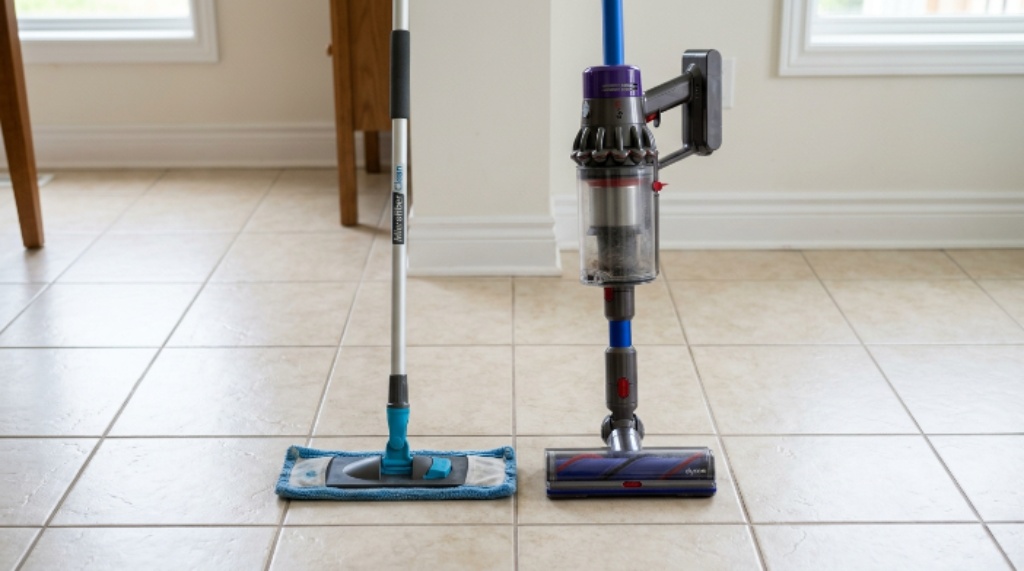
For smaller areas or quick daily touch-ups, a lightweight cordless vacuum with a hard floor setting is a smart addition to your routine. This brings us to one of the most common questions homeowners ask.
Vacuum vs Mop for Tile Floors: Which Should You Use First?
The vacuum vs mop tile floors debate comes up often, and the answer is straightforward: always vacuum or sweep first, then mop. Skipping the dry step means you are just spreading dirt around with your mop head.
Vacuuming is especially helpful in homes with pets or children. It picks up fine particles that brooms sometimes miss. Look for a vacuum with soft rubber wheels and a bare floor mode to avoid scratching your tiles.
Mopping comes next. It lifts stuck-on grime, sanitizes the surface, and restores shine. However, the type of mop you choose makes a big difference.
Choosing the Right Mop for Tile Floors
There are several types of mops available, and each has its strengths.
Flat microfiber mops are a popular choice for everyday mopping. They are lightweight, easy to wring out, and machine washable. They work well on smooth ceramic and porcelain tiles.
Spin mops are great for medium to large rooms. The spinning basket allows you to control how wet the mop head gets. This is important because excess water can seep into grout lines and cause mold over time.
Steam mops are an excellent option for deep cleaning. They use high-temperature steam to kill bacteria without any chemicals. However, they should not be used on natural stone tiles or floors with unsealed grout, as moisture and heat can cause damage.
String mops are traditional and effective for very dirty floors, but they tend to leave excess water behind. Therefore, they are best used in utility areas rather than on fine decorative tile.
Tackling Grout: The Often-Forgotten Challenge
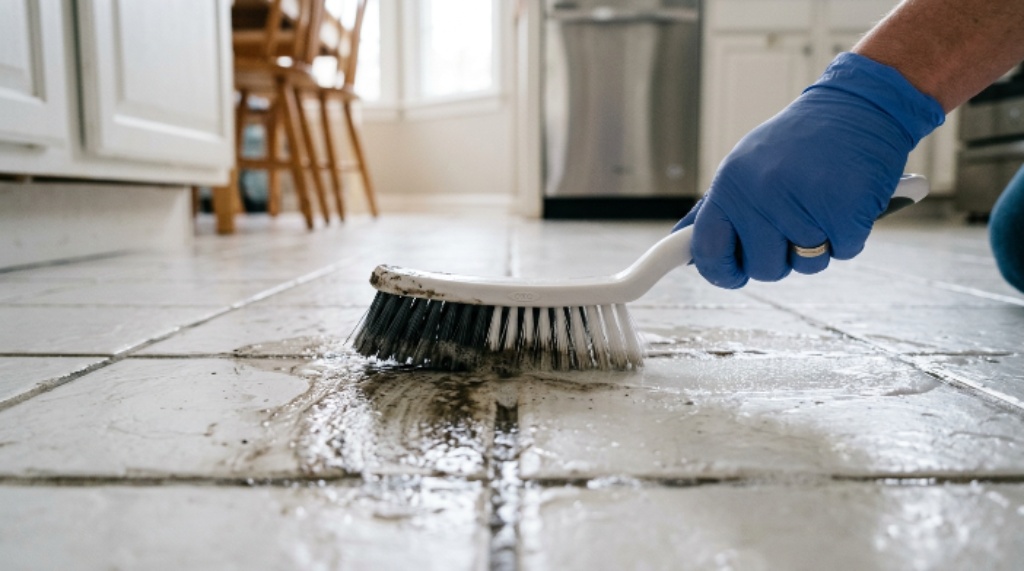
Grout is one of the hardest parts of any tiled surface to clean. It sits below the tile surface, collects dirt quickly, and can stain permanently if neglected.
For regular maintenance, a stiff-bristled grout brush works well. Pair it with a pH-neutral cleaner to avoid damaging the grout material. Additionally, an electric grout cleaning brush can save a lot of time and effort in larger tiled areas like shower walls or kitchen backsplashes.
Sealing your grout once or twice a year also helps. It creates a protective layer that prevents deep staining and makes future cleaning much easier.
Must-Have Floor Care Tools for Tile in 2026
Here is a summary of the essential floor care tools every tile floor owner should consider:
- A microfiber dust mop or soft-bristle broom for daily dry cleaning
- A cordless vacuum with a hard floor setting for thorough debris removal
- A spin mop or flat microfiber mop for regular wet cleaning
- A steam mop for periodic deep cleaning (check tile compatibility first)
- A grout brush or electric scrubber for grout maintenance
- A pH-neutral tile cleaner suitable for your specific tile type
- A grout sealer for long-term protection
These tools cover everything from quick weekday touch-ups to thorough weekend deep cleans.
Smart Tips for Extending the Life of Your Tools
Good tools last longer when you care for them properly. Rinse mop heads thoroughly after every use. Allow them to air dry completely before storing to prevent mildew. Wash microfiber pads regularly in the washing machine, but skip the fabric softener — it reduces the microfiber’s ability to trap dust.
For vacuums, empty the dustbin after each session and clean the filters monthly. A clogged filter reduces suction and makes cleaning less effective.
Additionally, replace mop heads every three to six months depending on how often you clean. A worn-out mop head will not clean effectively and may even leave fibers behind on your floor.
What to Avoid When Cleaning Tile Floors
Knowing what not to use is just as important as knowing what to use. Avoid steel wool, abrasive scrub pads, and any tool with metal parts that contact the tile surface directly. These can scratch glazed finishes permanently.
Steer clear of bleach-based cleaners on colored grout. Over time, bleach strips the color and weakens the grout structure. Also, avoid oil-based soaps on tile, as they leave a residue that attracts more dirt.
Finally, never use a soaking-wet mop. Excess water is the enemy of tile floors, especially those with porous grout or any minor cracks.
Conclusion
Choosing the right cleaning tools for your tile floors does not have to be complicated. Start by identifying your tile type, then build a simple toolkit around your daily and weekly cleaning routine. Use a dry tool first, then follow with the right mop for your space. Pay attention to your grout, and always use products that are compatible with your specific tiles.
The vacuum vs mop tile floors question has a simple answer: you need both, used in the right order. Combined with quality floor care tools and a consistent routine, your tile floors will stay clean, bright, and beautiful well into 2026 and beyond.
Small choices made today lead to floors that look great for years to come.
Frequently Asked Questions
How often should I mop tile floors?
For most homes, mopping once or twice a week is enough. High-traffic areas like kitchens may need more frequent attention. Daily dry sweeping or vacuuming between mops keeps dirt from building up.
Can I use a steam mop on all tile floors?
No. Steam mops work well on ceramic and porcelain tiles, but they can damage natural stone tiles like marble or travertine. Always check the manufacturer’s guidelines before using a steam mop on your specific floor.
What is the best way to clean grout without scrubbing too hard?
Apply a pH-neutral grout cleaner and let it sit for five to ten minutes before scrubbing. This loosens the dirt and reduces the effort needed. An electric grout brush is a great time-saving alternative to manual scrubbing.
How do I prevent water streaks after mopping tile floors?
Use a well-wrung mop with as little water as possible. After mopping, go over the floor with a dry microfiber cloth or allow good air circulation so it dries quickly. Excess water is usually the cause of streaking.
Is a vacuum or a broom better for tile floors?
Both work well, but a vacuum with a hard floor setting is generally more effective. It picks up fine dust and pet hair that a broom might miss. However, a soft-bristle broom is a practical, quiet option for quick daily use.
Related Topics: